
Release
Writing the truth, taming AI, fact-checking: key takeaways from the "DisOut" Conference
The "DisOut: How to Push Manipulations Out of the Information Space" conference was held on October 25 in Kyiv, organised by Internews Ukraine with the support of the Canadian government.
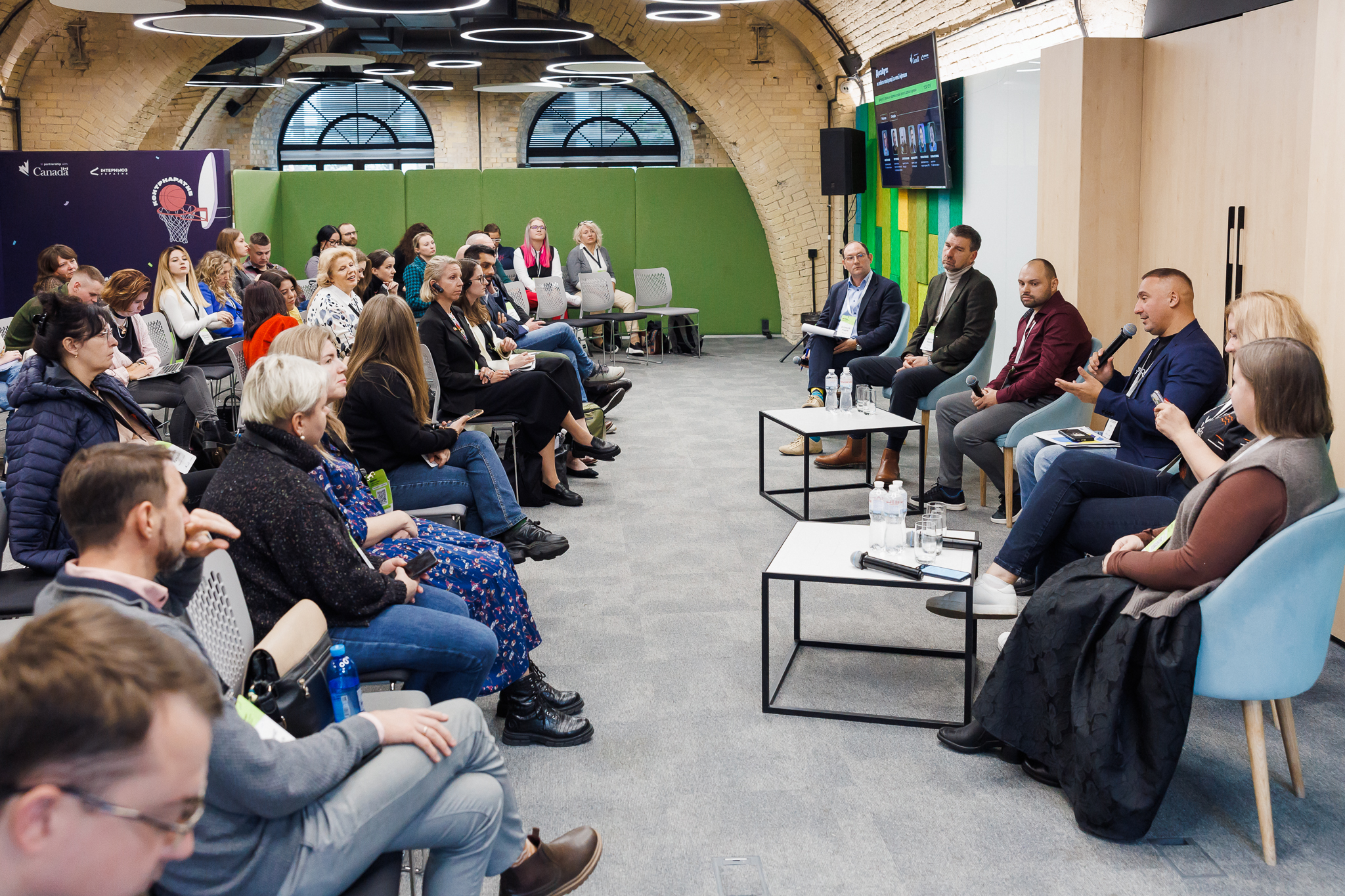
Journalists, media literacy experts, artificial intelligence and disinformation specialists, gender issues advocates, civil society members, and international representatives convened to address information security challenges and devise effective solutions to counter new threats.
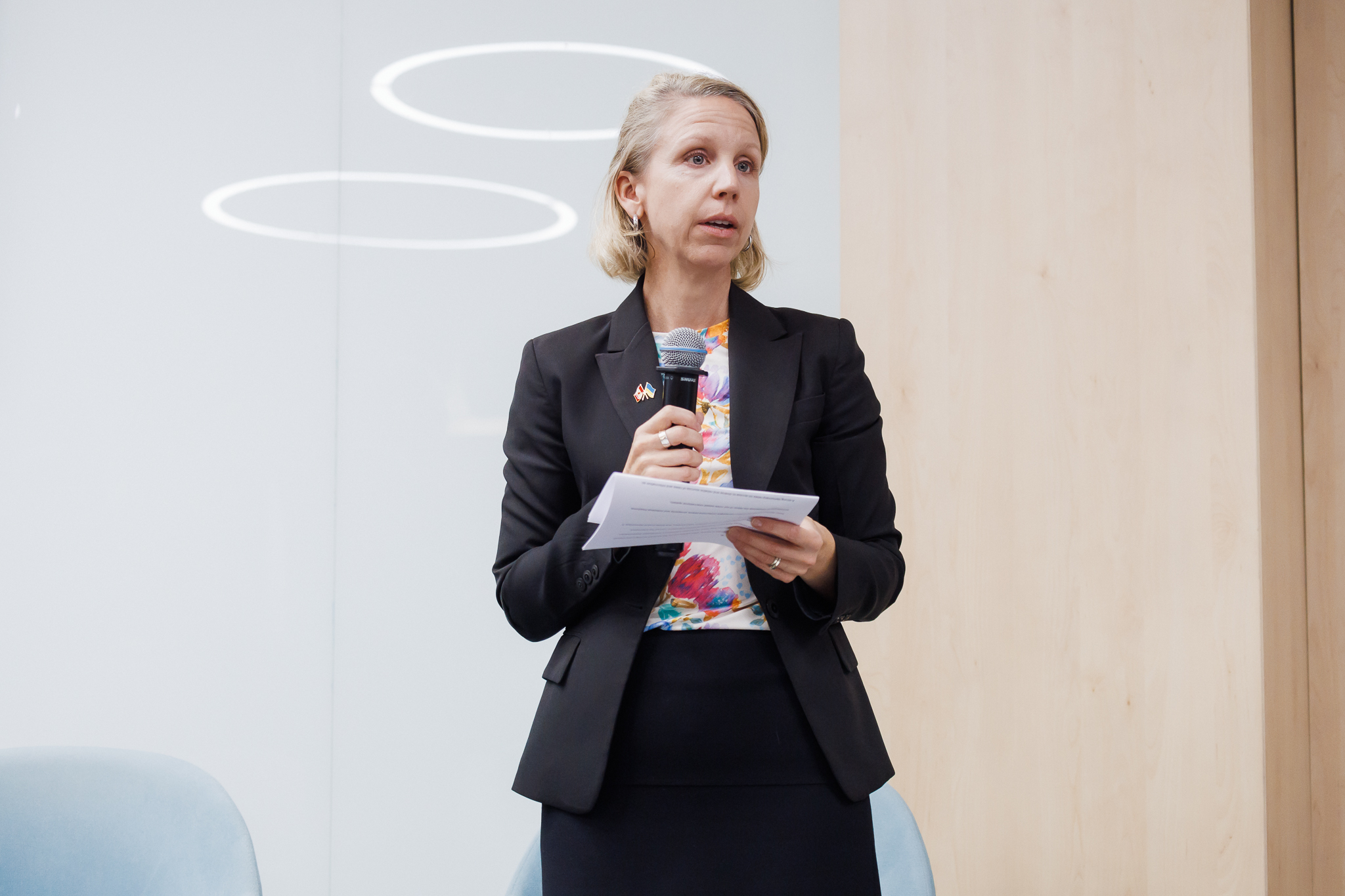
Pamela Moore, Executive Director of the Peace and Stabilisation Operations Program at Global Affairs Canada, delivered the event's opening speech. She stated that Russia coordinates global disinformation campaigns, spreading manipulative narratives to distort the information space and sow confusion, division, and distrust in democracy.
"These actions put many lives at risk, undermine peace, prosperity, and individual freedoms, and threaten to destabilize our rules-based international system," Moore told reporters.
Four-panel sessions focused on disinformation threats and how to combat them. During the first panel, speakers discussed the current state of Ukraine's information landscape as well as informational threats posed by the war. They identified several key threats to Ukraine's information security, including reliance on social media for news, decreased support for regional media, AI-generated fakes, declining trust in traditional media, and low-quality Ukrainian journalism. Participants suggested their own strategies for combating disinformation.
"To start off, we need to shut down channels that spread Russian disinformation as much as possible. The second direction is creating our own content, and the third is media literacy, so people can assess the truthfulness of information on their own," said Ihor Solovei, Head of the Centre for Strategic Communications and Information Security.
Currently, it is impossible to block all Russian disinformation channels on social media. Telegram, TikTok, and Meta are popular platforms for spreading fake content.
"We already know how to work with Telegram, but TikTok is still uncharted territory to us. Telegram is primarily text-based, whereas TikTok uses video and audio to vividly convey emotions. "When people don't want to look for information themselves, they turn to TikTok, where narratives are delivered in accessible language," explained Serhii Mikhalkov, a journalist and analyst at Texty.org.ua who specialises in analysing Russian disinformation.
Despite the consensus that Russia uses Telegram to spread fake news and manipulations, panellists question the need to ban it.
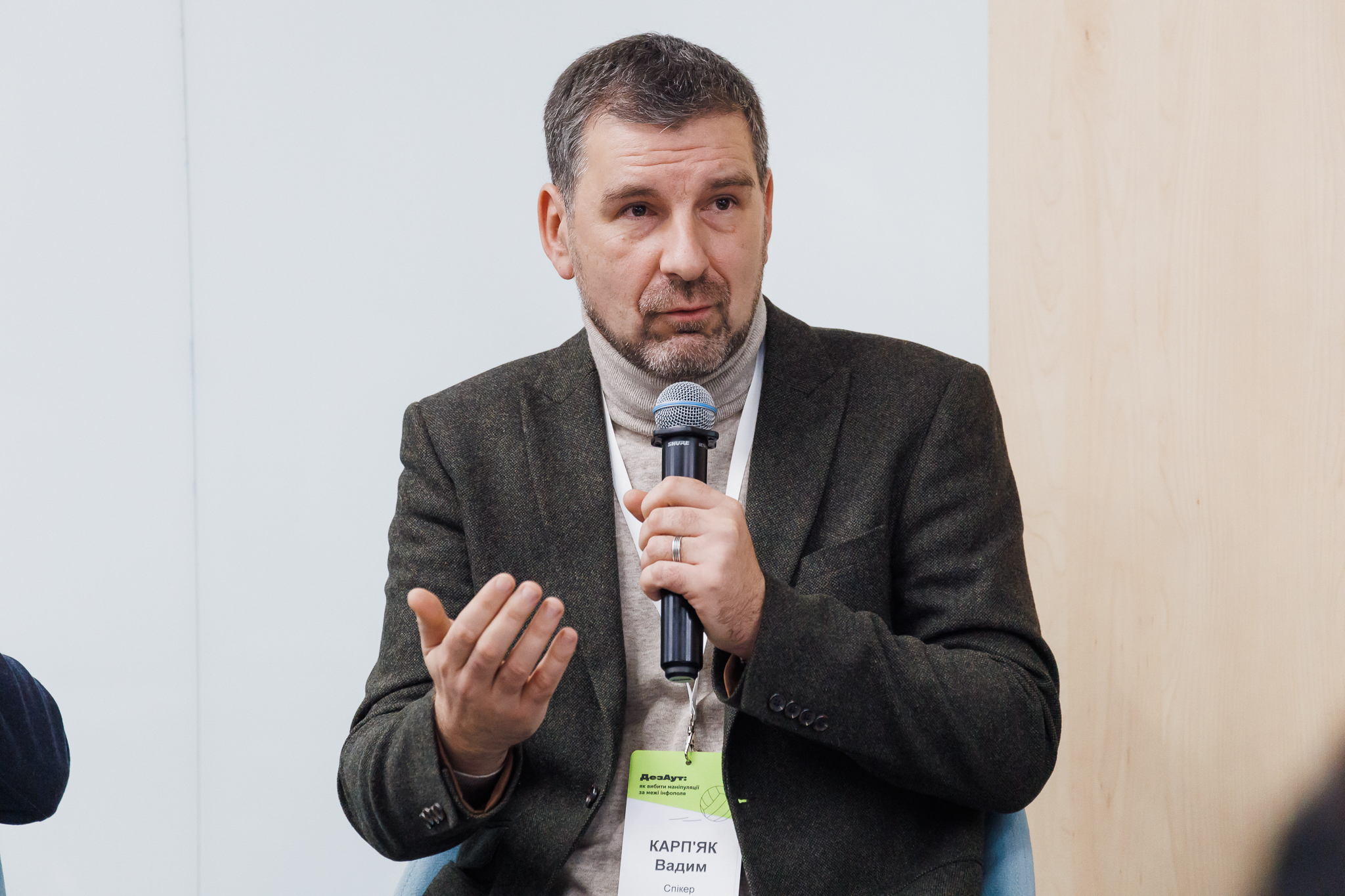
"If we shut down Telegram, the Russian disinformation budget will not disappear. There is concern that these budgets will simply shift to TikTok. Telegram allows us to analyse the content because it is text-based. TikTok, on the other hand, has terabytes of videos that are more difficult to monitor," explained Vadym Karpiak, journalist and host of the program Freedom of Speech.
Oksana Romaniuk, Director of the Institute of Mass Information, sees the spread of propaganda through certain social networks as a threat, as do the government's doubts about regulating these social networks. Another risk is a decline in trust in traditional media and the manipulations enabled by artificial intelligence.
"Finally, the polarisation caused by the United News Telemarathon has significantly shifted the pendulum of public trust. As a result, we have a very positive image on television, and society is looking for something else to balance it," Oksana Romaniuk explained.
Experts say a separate issue is a decline in Ukrainians' ability to recognise manipulation. In 2023, the media literacy index fell to 76% from 81% at the end of 2022. However, there is an explanation for this trend.
"Media consumption is one of the index's components. We're noticing that Ukrainians are experiencing news fatigue, and as a result of this decrease in consumption, people appear to be approaching source selection and fact-checking with less caution," explained Halyna Petrenko, Director of Detector Media NGO, which conducts the media literacy index assessment.
According to the organization's leader, only 12% of Ukrainians in 2023 understood the role of artificial intelligence in propaganda generation and believed they could identify it, despite the fact that AI is widely used to create fakes.
"Today, technology is so advanced that we no longer know what is real and what is not. You often see tips like 'How to distinguish real photos from generated ones,' but this information quickly becomes outdated," said Oleksii Minakov, a consultant and author of generative AI training, emphasising the risk.
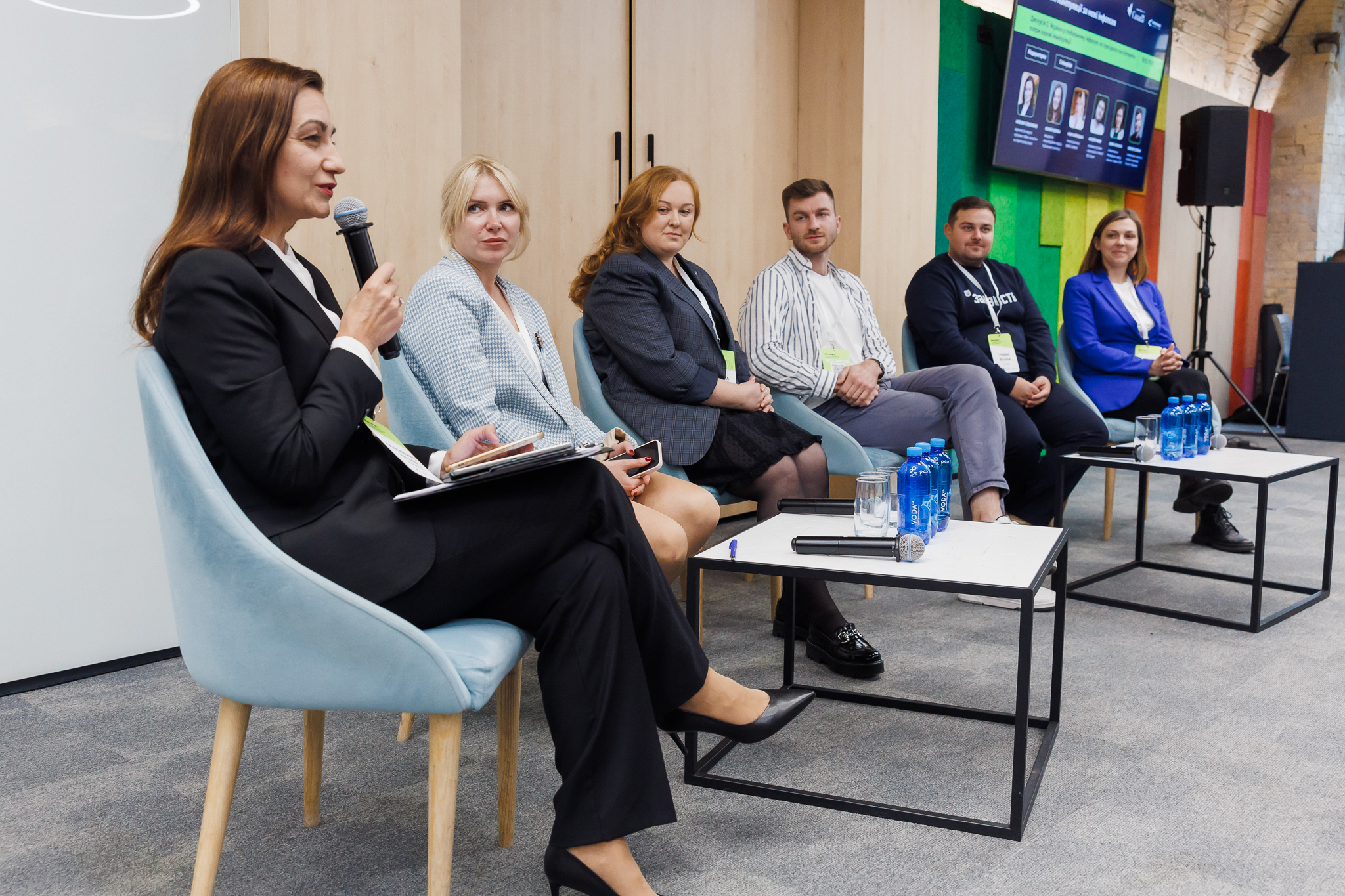
Experts believe AI can be used to combat disinformation by automating content analysis for manipulation, processing large amounts of data, and developing algorithms to detect specific patterns.
The conference also addressed gendered disinformation. Participants were shown research from the Ukrainian Armed Forces' StratCom on Russian propagandists' attempts to discredit Olena Zelenska both in Ukraine and abroad. The session concluded with a panel discussion about Russia's manipulation of gender-related issues.
Dzvenyslava Shcherba, an analyst at Internews Ukraine, identified four major gendered narratives in Russian propaganda targeting Ukrainian women:
- Justifying gender-based violence and calling for new war crimes;
- Portraying female Ukrainian soldiers as "not real women" to justify harsh treatment in captivity;
- Discrediting women who join the Ukrainian Armed Forces;
- Discrediting Ukrainian refugee women abroad
Some of them can also be seen in the Ukrainian information space. Internews-Ukraine conducted a study on the issue of gender disinformation in the media, which confirmed that these topics are used to reinforce inequality in society.
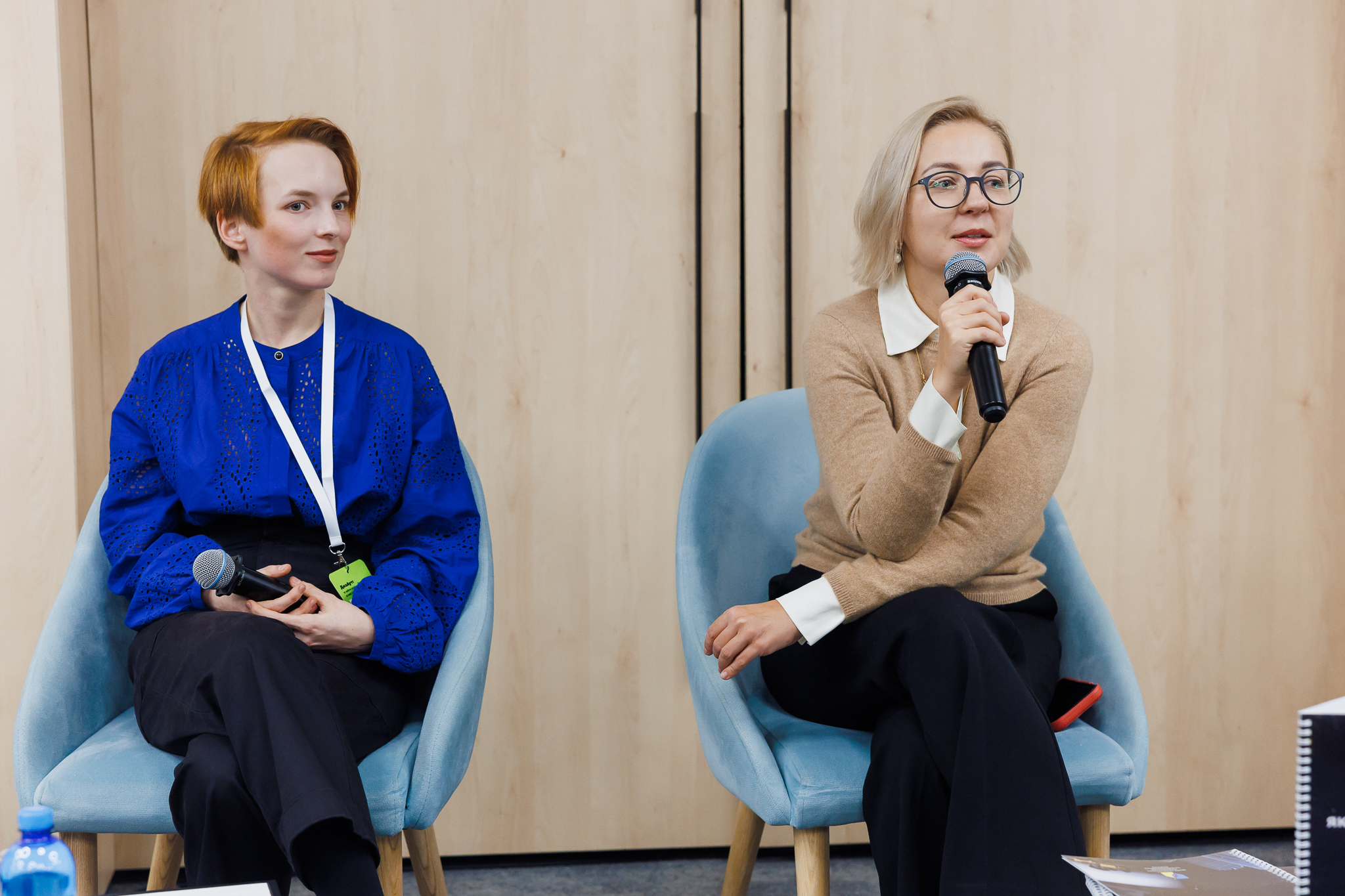
Inna Sovsun, Member of Parliament of Ukraine and senior lecturer at the National University of "Kyiv-Mohyla Academy", noted that some Ukrainians still hold somewhat outdated views on gender roles, which Russia exploits to its advantage.
"But this does not mean we should give up and forget about women's rights. "We need to respond proactively and spread truthful information, especially to the younger generation," she said.
Speakers noted that Ukrainian teenagers are still influenced by Russian disinformation, as their consumption of Russian content remains high.
Promoting Ukraine's narrative and countering Russian information manipulation is necessary not only at home but also internationally. Participants in the fourth panel discussed how Ukraine can counter Russia in the global information space. The speakers agreed that the best strategy for combating disinformation is to promote Ukraine's own narratives. This necessitates delivering news from Ukraine to international audiences via Ukraine's own media resources.
"We must write the truth." Oleksii Sorokin, co-founder and deputy editor-in-chief of The Kyiv Independent, stated, "People who read us should understand that whatever happens in Ukraine, Russia, or the region in general, they can trust our information."
He emphasised that in the global information field, Ukrainian media should adapt their content for international audiences while not shying away from critical observations, as this builds trust and enhances reputation.
With proactive global attention to Ukraine declining over the past year, Ukrainians must find new ways to reach international audiences.
The event also featured the following speakers: Pavlo Bielousov, digital security expert at Internews-Ukraine; Olha Petriv, AI law specialist at CEDEM; Maksym Vikhrov, senior analyst at the Center for Strategic Communications and Information Security; Mykhailo Koriukalov, gender issues expert and Ph.D. in Political Science; Kseniia Kalyna, head of the communications department at the Ukrainian Institute; Mariia Lypiatska, head of BRAND UKRAINE; Vitalii Rybak, information resilience program manager at NDI; and Olena Halushka, co-founder of the International Center for Ukraine's Victory (ICUV).
The conference was organized by Internews Ukraine as part of the project "Strengthening Truth, Transparency and Democracy to Counter Disinformation", supported by the Government of Canada.
Related Events and News
Russian Propagandists Must Be Held Accountable for Their Crimes Against Ukraine
Investigated the impact of Russian propaganda on the world-view of Russians, including servicemen.