
Empowering Ukrainian Communities
Preventing Gender-Based Violence
challenge
The war leads to an increase in gender-based violence.
Gender-based violence (GBV) is violence against a person due to their gender, primarily affecting women and girls. According to UNDP, 600 women die each year in Ukraine as a result of domestic violence perpetrated by men.
The issue of gender-based violence has become even more urgent during wartime. In a survey on challenges for young women during the war conducted by Internews-Ukraine and UN Women, 87% of respondents believed that violence against women and girls in Ukraine had intensified since the start of the full-scale Russian invasion. In addition, 45% of respondents reported being afraid to walk past large groups of men in public places due to the fear of sexual violence or unwanted sexual comments, and 24% indicated that since the beginning of the full-scale war, they had experienced sexual harassment in public places in the form of unwanted verbal remarks or offensive sexual jokes/stories.
solution
Involving Young Men in the Fight Against Gender-Based Violence
To reduce the level of violence against women and girls, it is essential to work primarily with men. Instead of perceiving men solely as a potential threat, we decided to equip them with the necessary tools to advocate for gender equality and nonviolent communication.
For this, we first conducted a comprehensive study involving 347 residents of communities from Dnipropetrovsk, Donetsk, and Poltava Oblasts. Our analysis showed that men and women in the project's target regions had different levels of knowledge and attitudes toward gender equality and GBV. Respondents had a high level of knowledge about sexual violence, while they showed insufficient awareness regarding economic inequality and gender stereotypes.
We distributed 135 copies of this report to local authorities, educational institutions, and NGOs.
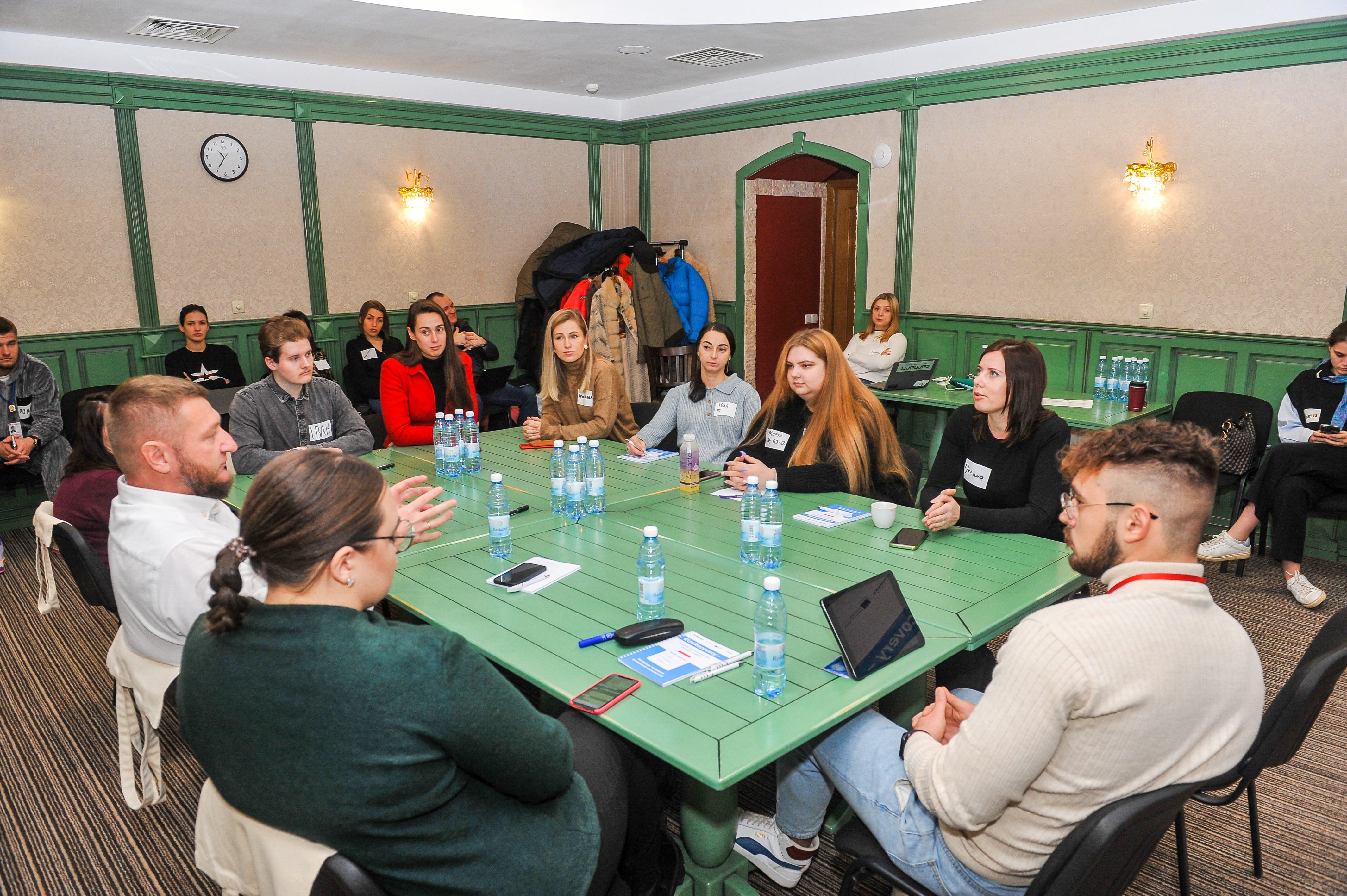
Based on our study, we developed an educational program to provide community members with the knowledge and skills needed to combat GBV. Specifically, we conducted six online and offline training sessions for young men, an online conference, three workshops, and roundtables with activists, educators, internally displaced persons, local authorities, and law enforcement representatives.
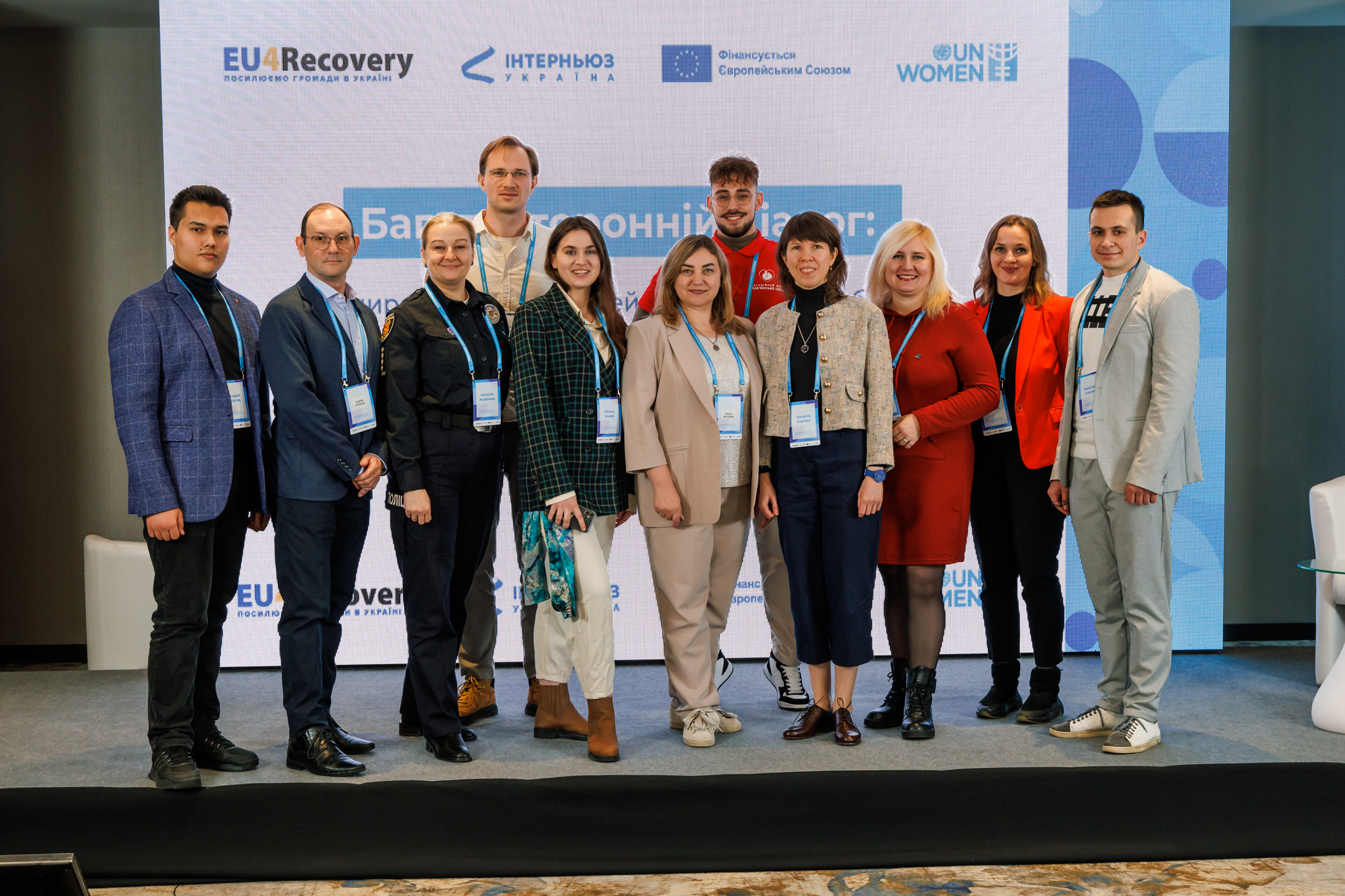
The culmination of the exchange of experiences and valuable networking was a multilateral dialogue in Kyiv. During the event, young men and women from the target regions discussed the main challenges of gender equality, shared experiences on preventing and responding to GBV, and laid the foundation for partnerships. We established cooperation with three regional coalitions for the implementation of UN Security Council Resolution 1325 "Women, Peace, Security." 10 local organizations, and 50 initiatives. We provided communication support, amplifying their voices in preventing gender-based violence.
Another important phase of the project was the broad communication campaign. We published 10 articles on gender equality, toxic masculinity, nonviolent communication, and combating GBV in regional online media. These topics were also explored in detailed materials in national media outlets including Rubryka, Ukrainska Pravda, hromadske, and Vector. Additionally, five gender experts appeared on Hromadske Radio, and UN Women representative in Ukraine Sabine Fraser participated in the "Damn Questions" podcast by Ukrainska Pravda.
We also engaged young audiences by working with bloggers. Dzvenyslava Shcherba, an analyst from Internews-Ukraine, appeared on the Bunkernyi podcast by the Brutal Football project team, where she discussed gender inequality in sports.
Moreover, we created two video explainers on gender stereotypes in the workplace and in the family, as well as 20 infographics with useful information on topics including gender equality in Ukraine, combating GBV, nonviolent communication, and engaged fatherhood. We placed the project materials, support service contacts, and shelter addresses for GBV survivors on the project website eu4recovery.com.ua.
result
Young Men Know and Promote Gender Equality Ideas in the Regions
Over the 10-month course of the project, we managed to reach over 3,000,000 people. Educational training sessions, workshops, and communication materials showed men that gender-based violence can be opposed by everyone, and gender equality is an important value of a democratic society.
Through online and offline events, we facilitated a dialogue between representatives of four sectors related to gender equality: local authorities, education, law enforcement, and civil society. All of them gained the necessary knowledge and skills to create positive changes and platforms for further cooperation.
Thanks to the project, its participants launched 4 initiatives on gender equality and violence prevention. For example, 19-year-old Andriy Chastov from Donetsk Oblast, together with his friends, created the NGO Pro Molod, one of whose areas of focus is promoting gender equality. As part of this initiative, Andriy has already conducted 11 educational sessions on this topic for 337 high school students from the Pokrovsk community.
Similarly, 22-year-old Yehor Antonov from Dnipropetrovsk Oblast created and implemented the educational program "Prevention of Violence and Equality - Our Shared Goal," through which he conducted three offline sessions. He was also invited to be a trainer for the gender equality program for teenagers at a charity foundation in Kryvyi Rih.
"The topic of gender equality really interested me. I started telling people about it. I would gladly take parental leave with my child and be a good father. This is also what drives me to promote gender equality ideas," explains Yehor.
The project "EU4Recovery — Empowering Communities in Ukraine" (EU4Recovery) is implemented by the United Nations Development Programme (UNDP) in Ukraine, with the involvement of the United Nations Population Fund (UNFPA) and the UN Women, with financial support from the European Union.