
Communication Campaign to Promote Cybersecurity in Ukraine
Cybersecurity for Everyone
challenge
Hybrid war against Ukraine and escalating cyber threats worldwide
The conflict between Ukraine and Russia extends beyond traditional battlegrounds to include cyberspace. According to the State Service for Special Communications, there was a spike of 360 cyberattacks on our nation in 2023 compared to 2022 (2554 versus 2194). Telecommunications networks, power grids, and other critical infrastructure are all under siege.
Russian hackers have targeted media outlets, government institutions, and ordinary citizens. They've even attempted to surveil Ukrainian soldiers' mobile devices using spyware. Their tactics are continually evolving as they seek new methods to harm Ukrainians.
However, Ukrainians are not the only ones facing these dangers. Cybercrime rates have surged globally in recent years, with phishing and personal data breaches particularly prevalent in 2022. Due to a lack of cybersecurity awareness, Ukrainians are increasingly falling victim to these criminal activities.
solutions
Learning to protect yourself online: a multi-channel campaign Enhancing personal cybersecurity awareness is one of the most effective strategies for safeguarding against digital intrusions and Russian cyberattacks. To achieve this objective, the Internews Ukraine team, with support from CRDF Global, launched an extensive communication campaign. Our aim was ambitious: to explain cyber hygiene principles to both teenagers and older Ukrainians, recognizing that cyber threats affect us all.
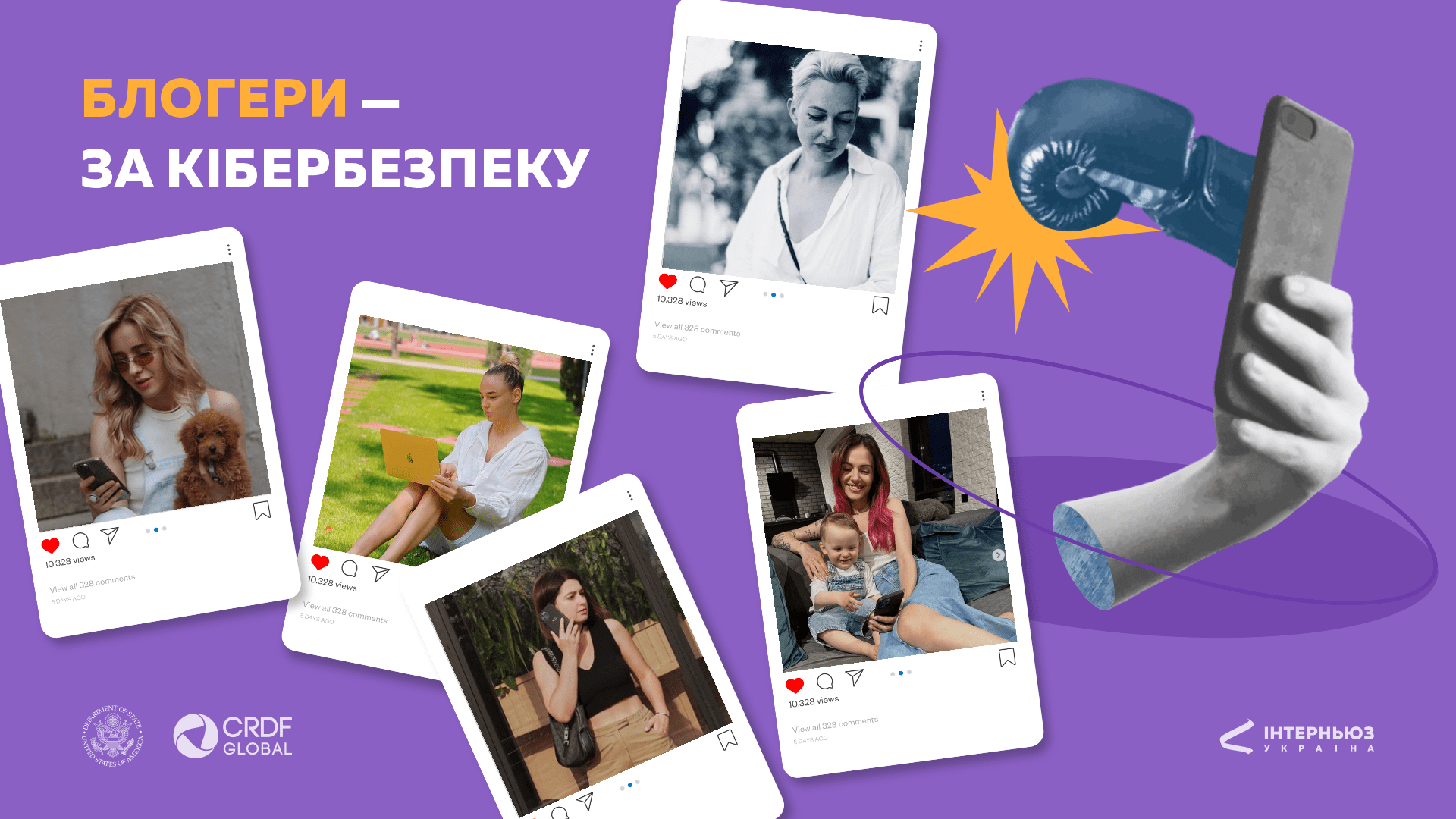
In collaboration with 15 bloggers and influencers, we disseminated crucial and straightforward cybersecurity guidelines to their followers. Singer MamaRika, travel blogger Vladislav Khilchenko (Odnoyi Pravoi), athlete Daria Bilodid, and other famous Ukrainians shared methods for creating robust passwords, safely utilizing public Wi-Fi, and guarding against phishing attempts.
We understood the significance of Ukrainians not only gaining knowledge but also implementing it in real-life scenarios.
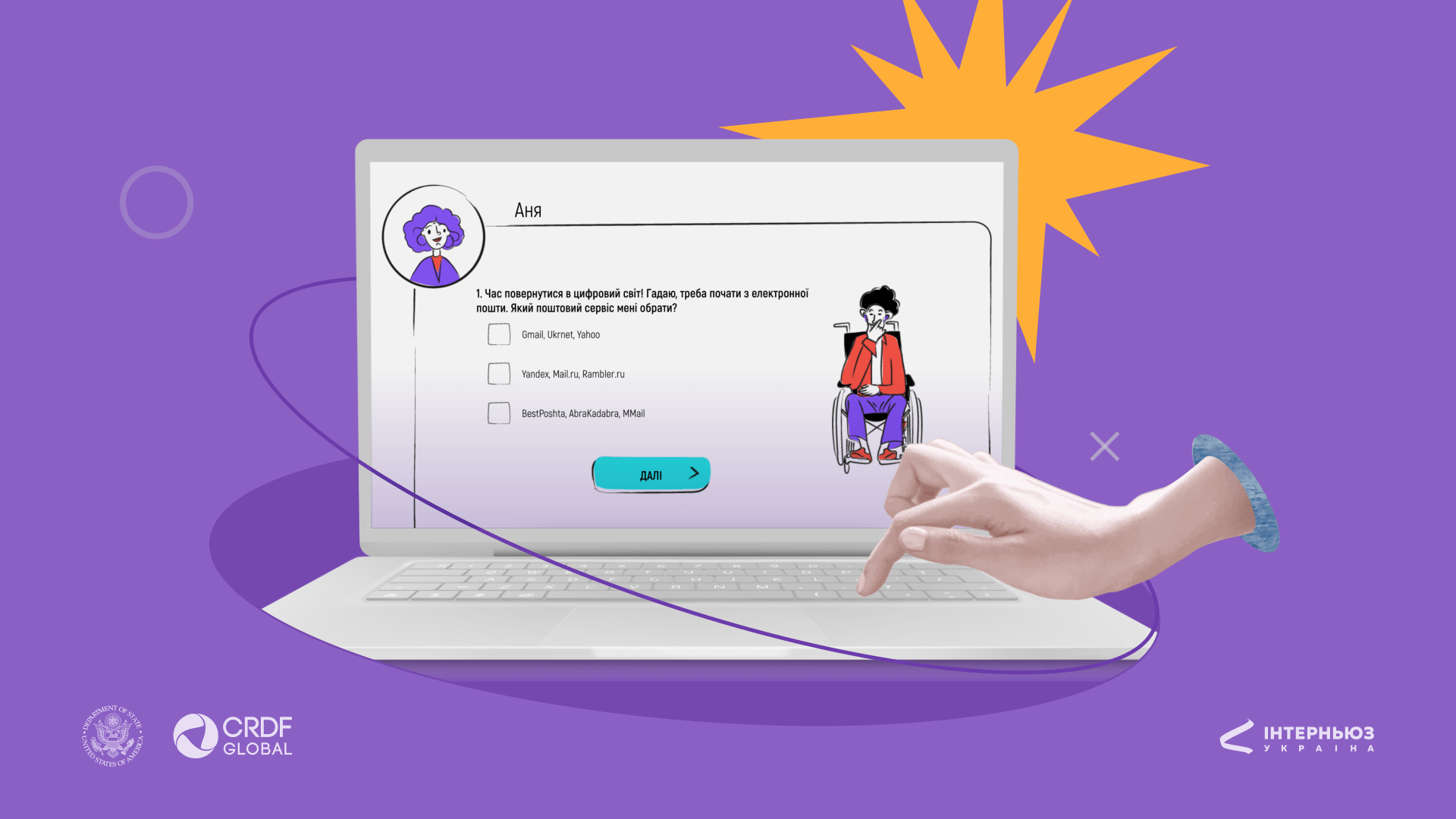
That is why, in collaboration with ShoTam media, we introduced a landing page featuring fundamental cybersecurity guidelines and an interactive game. This platform enabled users to delve deeper into cyber hygiene principles and immediately assess their understanding. The game was designed as a virtual 'house,' where fictional characters encountered various cyber threats and had to navigate their way out of challenging situations.
Furthermore, we provided an opportunity for everyone to evaluate their comprehension through an Instagram quiz.
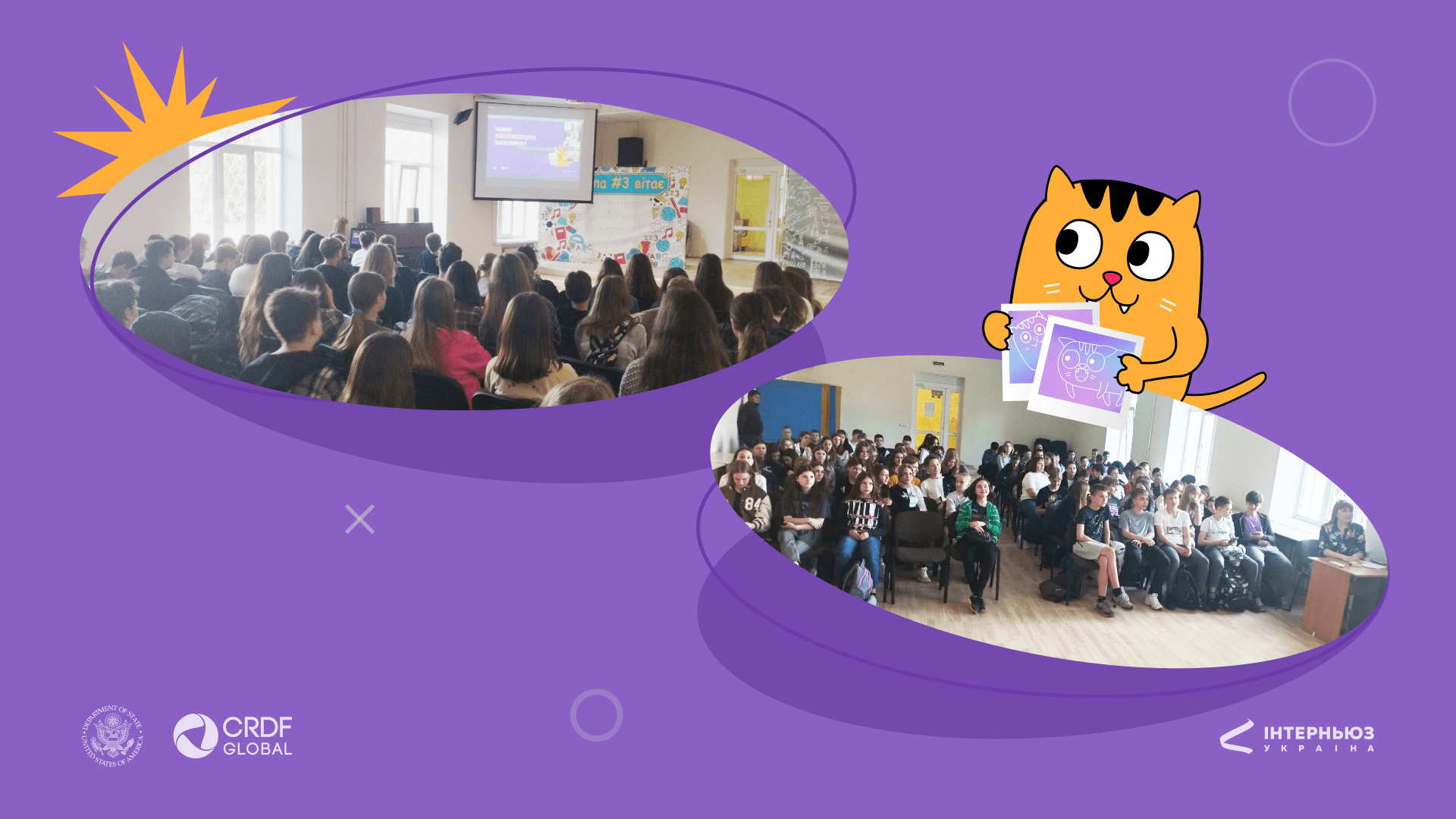
Ensuring online safety starts from childhood. That's why our project team conducted seven cyber hygiene lessons for students in Lviv, Vinnytsia, Chernihiv, and Kyiv. During these sessions, students were challenged by questions like, 'Is it safe to disclose that my father is a soldier online?' and 'Why should I not post personal photos?'
Furthermore, we produced a video lesson featuring members of the comedy team Trio Rizni (Trio Different), who received cyber hygiene guidance from our expert, Pavlo Belousov.
We also collaborated with popular YouTube channels #ShoZaSong and What? Explorers of Ukrainian, where the presenters explained the risks of sharing certain information online and shared cybersecurity protocols tailored for gamers.
To further engage audiences, we shared 30 social media posts focusing on cyber hygiene and created an Instagram mask offering 'cyber predictions'. This interactive feature scans users' faces and provides internet safety advice.
Our campaign extended to both online and print media platforms, publishing 30 articles addressing crucial cybersecurity topics. These included discussions on online privacy, secure apps for internally displaced persons (IDPs), and the dangers associated with public Wi-Fi networks. Additionally, we conducted a workshop titled How to Report on Cybersecurity while Maintaining Personal Cyber Hygiene for 37 media professionals.
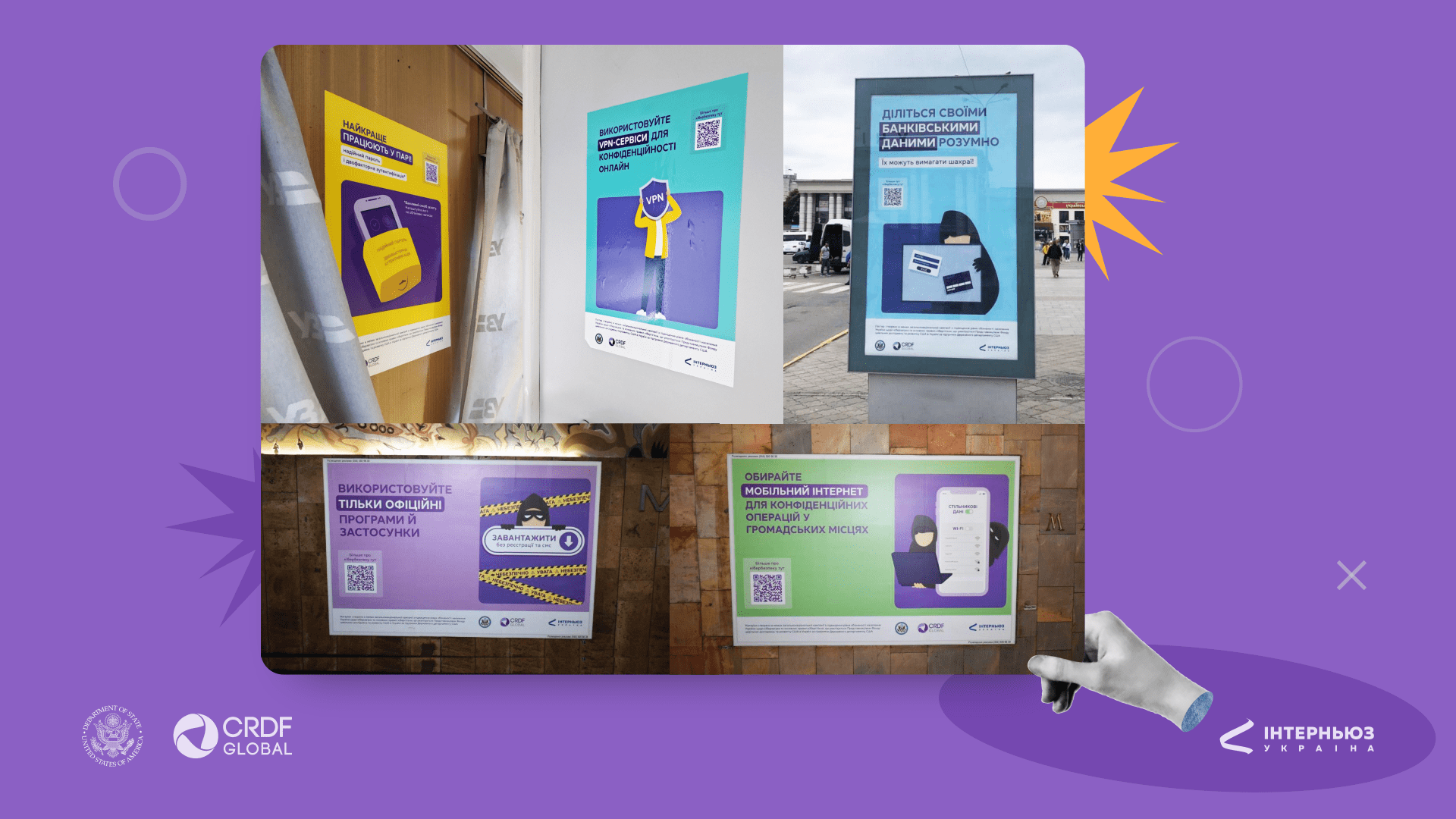
Another significant aspect of our campaign involved educational advertisements promoting cybersecurity rules. These ads were strategically placed on trains, billboards, and subways in Kharkiv and Kyiv.
results
Over 18 million Ukrainians were introduced to the fundamental principles of cyber hygiene.
In collaboration with CRDF Global, our team successfully educated Ukrainians on cyber threats and effective protective measures. The campaign achieved extensive reach through a combination of offline and online initiatives.
Our social media posts promoting cyber hygiene rules reached an audience of 1.57 million users, far surpassing the initial target of 150 thousand. Collaborating with influencers proved equally fruitful, reaching over 1 million Ukrainians.
Advertising posters displaying cyber hygiene guidelines in subways, trains, and public transport stops garnered visibility from 15 million individuals. Our online game hosted on the national media platform ShoTam attracted 34,625 users, while an additional 111,774 participants participated in the Instagram quiz.
Articles discussing basic internet safety rules garnered a total of 621,360 views. Editors who published campaign materials received positive feedback from readers expressing gratitude for the valuable information provided. Our journalist workshop received an 'Excellent' rating from 92% of surveyed participants.
Our three YouTube videos addressing cyber hygiene amassed a combined total of 307,398 views. Predictions generated by our Instagram mask were shared by 13,353 users.
The cybersecurity lessons garnered significant interest, with 626 Ukrainian school children participating. Additionally, the video lesson featuring Trio Rizni members amassed 26 thousand views.
People of all ages across Ukraine eagerly embraced the project, equipping themselves to navigate cyberspace with greater confidence and fend off potential intruders.
This project was conducted as part of a nationwide campaign aimed at enhancing awareness of cyber threats and fundamental cyber hygiene principles among the Ukrainian populace. The campaign was implemented by the USCGF Office in Ukraine with support from the US Department of State.