Press release
Conspiracy Theories and Beyond: How Russian Propaganda Is Evolving in the Information War Against Ukraine
Recently, the team from the NGO Internews-Ukraine presented the principal findings of their research, "Invasion of the Mind: Two Years of Malicious Information Operations in Ukraine and Belarus."
The research was conducted by experts from Internews-Ukraine in collaboration with colleagues from LetsData. The study focuses on Russia's information war against Ukraine and its implications for Belarus. As part of the analysis, the researchers identified over 2 million publications containing Russian disinformation (in social networks and online media) and analyzed 268 malicious channels and pages that disseminated them. The report covers the period from December 2021 to the end of February 2024 and details the evolution of Russian narratives during the full-scale war including justifications for aggression, attempts to undermine international support for Ukraine, the ineffectiveness of sanctions against Russia, and various conspiracy theories.
Among these are claims of "external control" over Ukraine, the operations of U.S. biolabs on Ukrainian territory, the Illuminati seizing power, and the existence of secret agreements between the West and Russia, among others. Additionally, the experts analyzed shifts in propagandists' rhetoric on negotiations over time.
According to the research findings, Telegram remains the largest platform where Russians disseminate their narratives: Of the 268 identified malicious channels and pages, 160 are on Telegram channels.
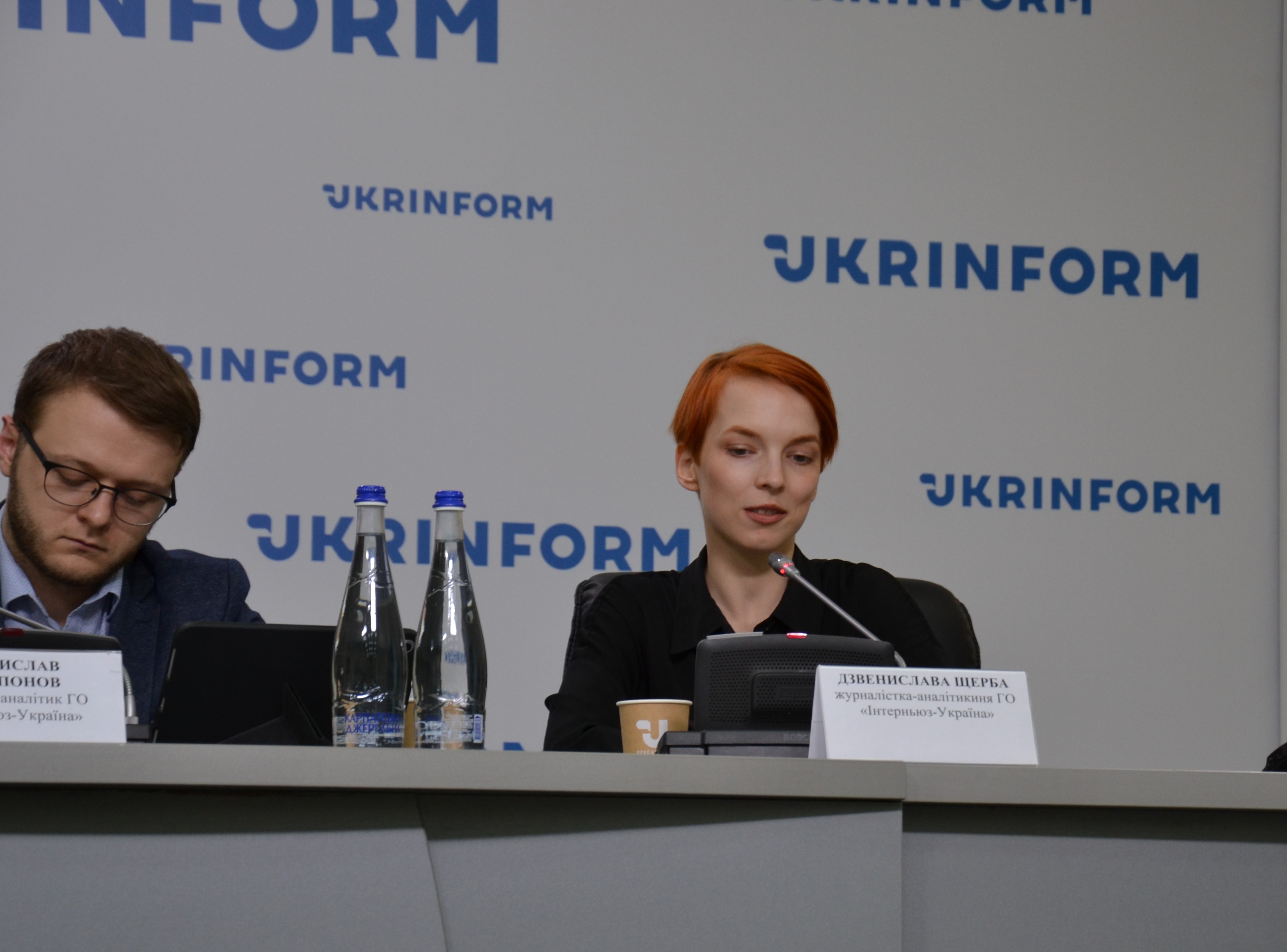
Since August 2022, conspiracy theories have been disseminated not only through posts but also in comments on pro-Russian Telegram channels, disguised as messages from supposedly ordinary users. These comments were predominantly in Russian. We also observed that malicious channels were distributing identical content across different periods, said Dzvenyslava Shcherba, an analyst at Internews Ukraine.
Researchers have documented shifts in the rhetoric of propagandists: before the invasion, the narrative focused on “the West allegedly escalating tensions between Ukraine and Russia for the benefit of military companies in Western countries”. In the first months of Ukraine's resistance, Russians claimed that the West was allegedly sponsoring Nazism in Ukraine as a retaliation against Russia for defeating it in World War II. Subsequently, these conspiracy theories evolved into a narrative about the “War of the West to the Last Ukrainian” for profit, weakening Russia, and seizing resources.
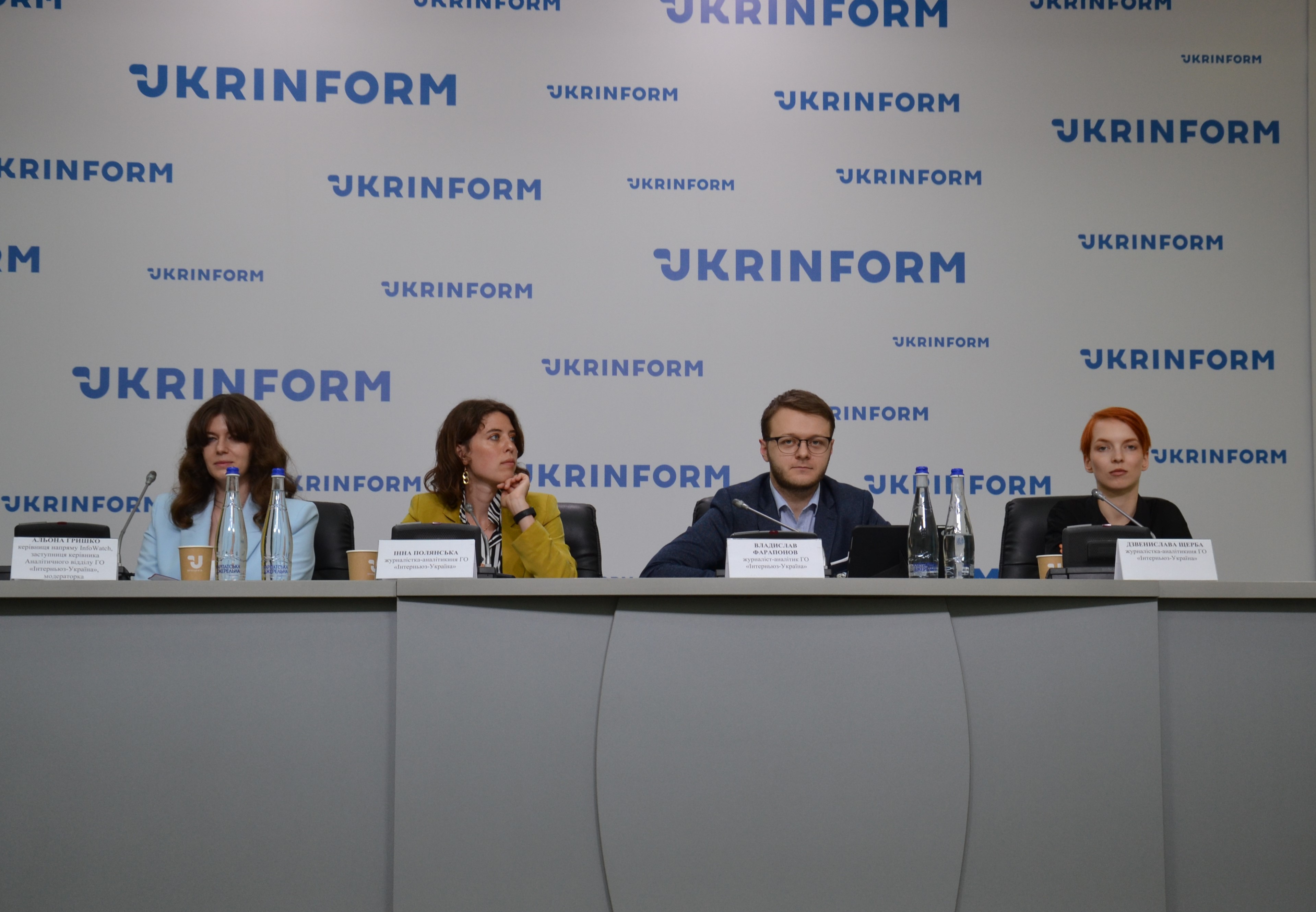
Vladyslav Faraponov, an analyst at Internews Ukraine, outlined the most prominent trends in Russian propaganda regarding negotiations between Russia and Ukraine. These include the denial of the aggressor's negotiation proposals, accusations against the West for 'sabotaging' peace talks, speculation about a deal between Russia and the U.S. without Ukraine's involvement, discrediting Switzerland as a mediator in the negotiation process, and ostentatious signals of supposed readiness for dialogue on Russia's terms. However, Moscow’s actions remain destructive and contradict the rhetoric it “sells” to its citizens.
The examples presented indicate that Russia, in one way or another, is proposing to change the current world order. This includes imperialistic assertions, accusations that other countries are sabotaging negotiations, and more, concluded Faraponov.
Experts believe that Russian propagandists are targeting the population in the Temporarily Occupied Territories (TOT), conducting information campaigns, and attempting to integrate the population into a unified information space while also promoting Russification. The focus is shifting away from the demonization of Ukraine and everything Ukrainian to spreading positive narratives about Russia and Russians. In this way, Russian propaganda is attempting to convince residents that they are and always have been part of Russia.
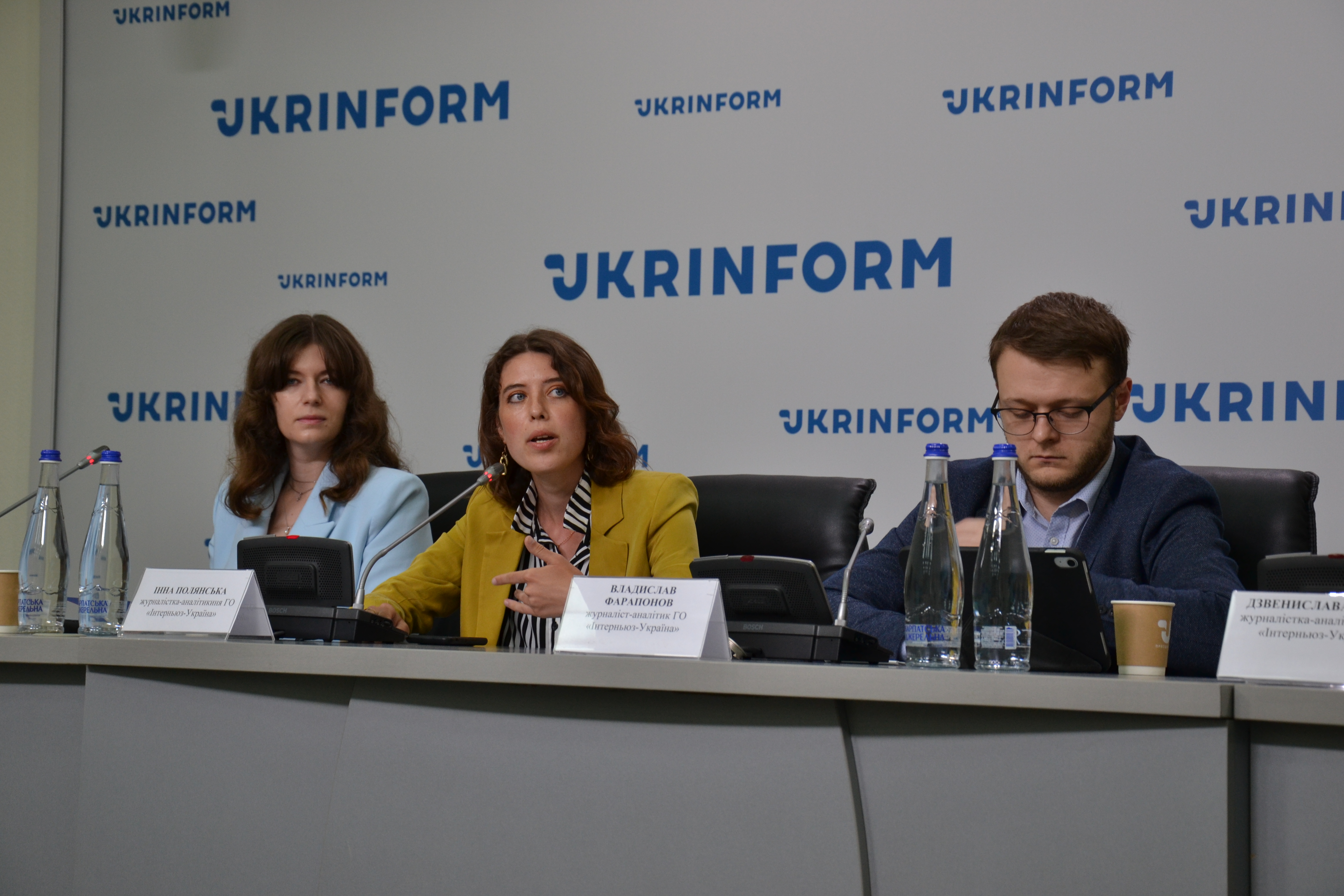
A constant presence of voices from the Temporarily Occupied Territories in the Ukrainian information space is necessary to ensure that people in the Temporarily Occupied Territories do not become distant 'others,' as this is one of Russia's goals in the information war, Inna Polyanska, an analyst at Internews Ukraine, said.
At the end of the event, experts from the Belarusian Association of Journalists and Media IQ also shared their findings on the spread of Russian narratives about the war in Ukraine within the Belarusian information space. They presented the findings of a content analysis of 49 major Belarusian Telegram channels, as well as the messages of Russian propaganda disseminated by the country’s four largest TV channels.
The presentation can be accessed via the link.
The presentation featured:
- Dzvenyslava Shcherba, Inna Polyanska, and Vladyslav Faraponov, analysts from Internews Ukraine;
- Kseniya Ilyuk, co-founder and Chief Operating Officer of LetsData;
- Andrey Bastunets, the head of the Belarusian Association of Journalists;
- Paulyuk Bykovsky, senior analyst at Media IQ.
The event was moderated by Alona Hryshko, Head of InfoWatch and Deputy Head of the Analytical Department at Internews Ukraine.