
conclusions from a multilateral dialogue
Preventing gender-based violence amidst war
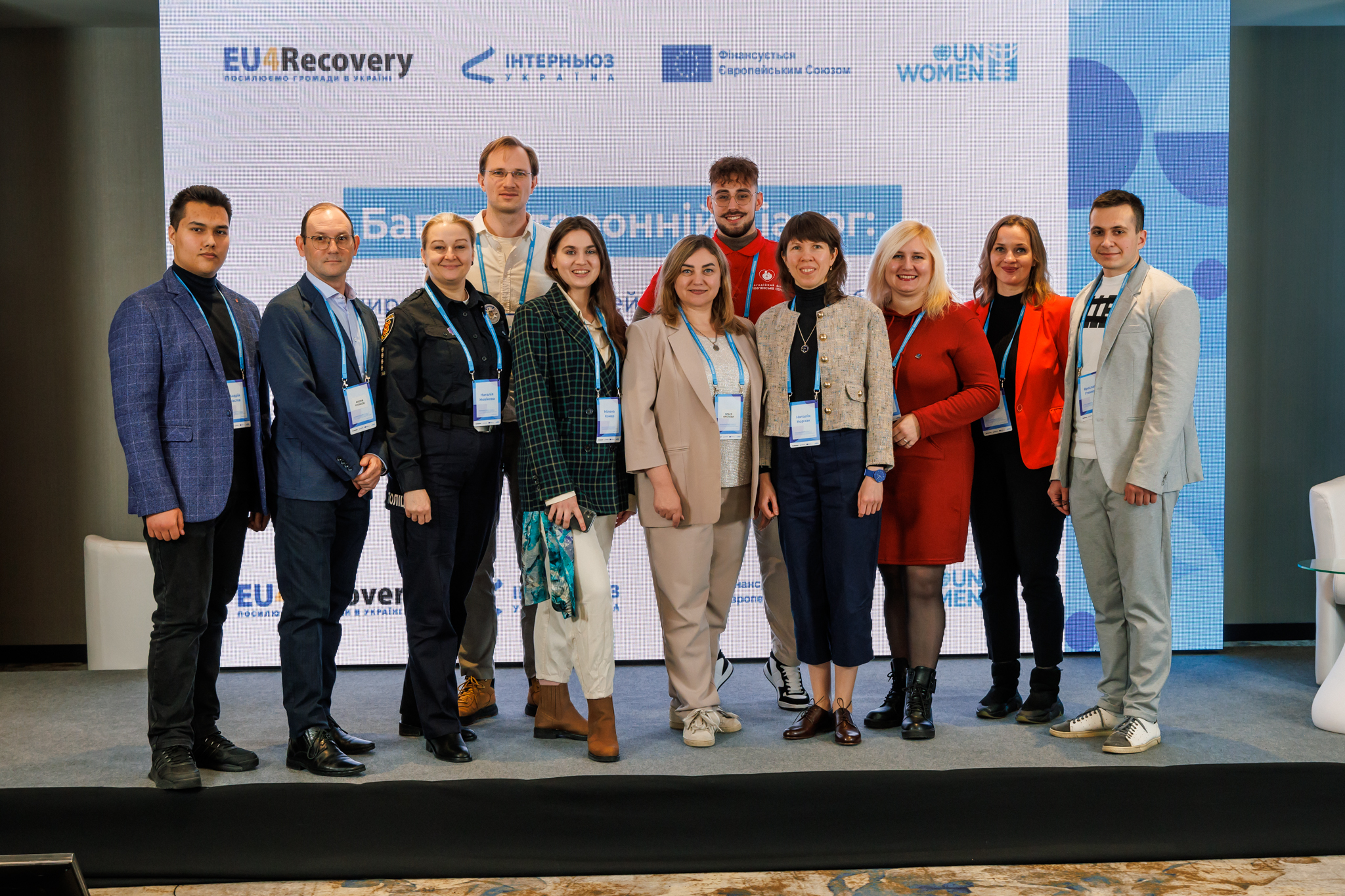
On 16 December, a multilateral dialogue on "Empowering Communities to Prevent Gender-Based Violence in Ukraine" was held in Kyiv as part of the EU4Recovery - Empowering Communities in Ukraine project. Young men and women discussed the main challenges to gender equality, shared experiences in preventing and addressing gender-based violence (GBV), and laid foundations for partnerships.
The event brought together representatives of civil society, local authorities, law enforcement, and the educational sectors from Dnipro, Donetsk, and Poltava Oblasts.
THE ROLE OF MEN IN COMBATING GENDER-BASED VIOLENCE
"The fight against violence against women must start with each and every one of us," said Iryna Pavlyk, Programme Analyst at UN Women. "I am raising my two sons to be feminists who do not tolerate any form of sexism or gender discrimination. I want them to be guided by European values in their lives." Pavlyk argues that gender equality is one of the key conditions for Ukraine's accession to the European Union: "Although this issue is a priority for all developed countries, according to the United Nations Development Programme assessments, the world needs 298 years to achieve gender equality."
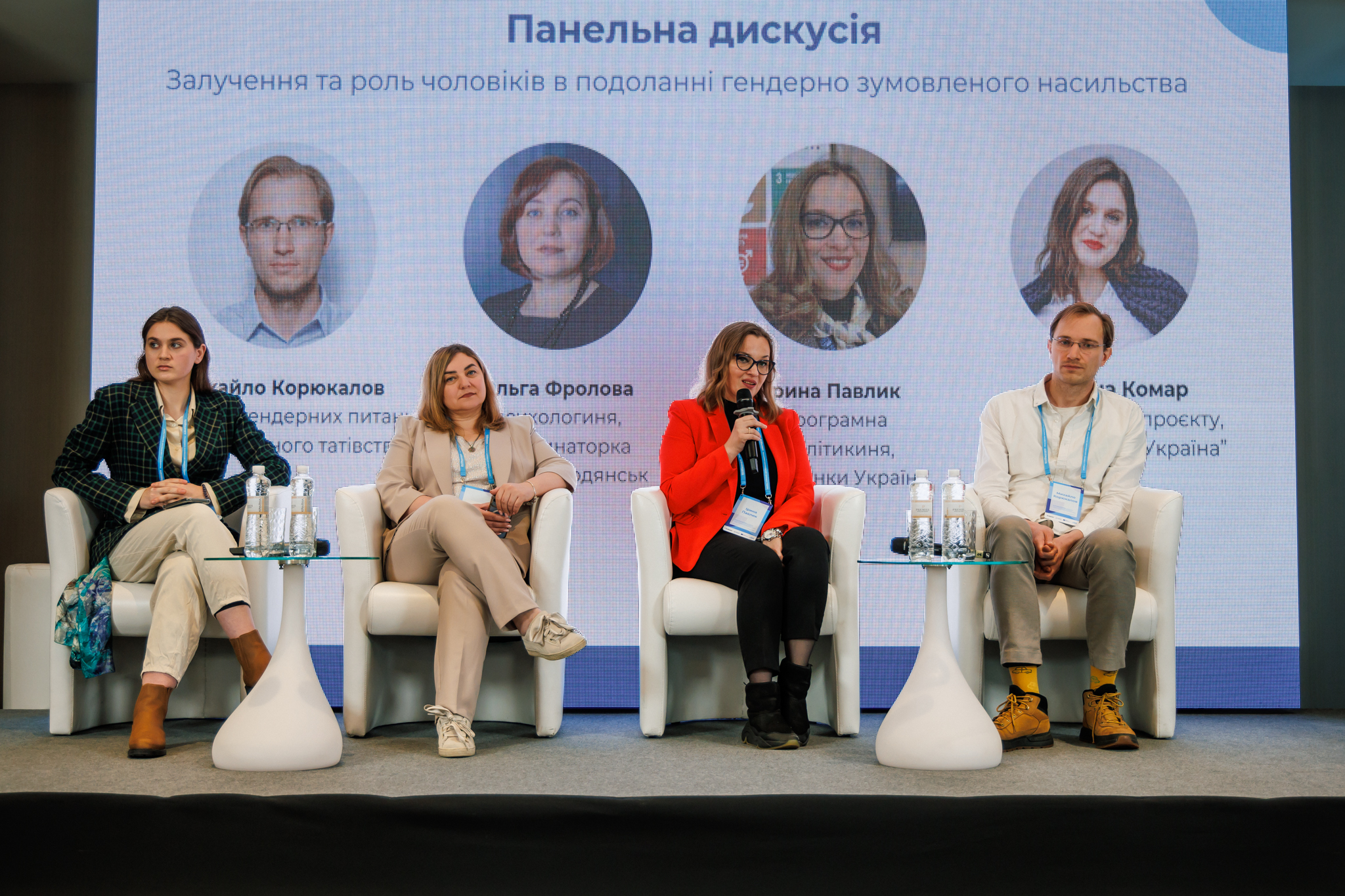
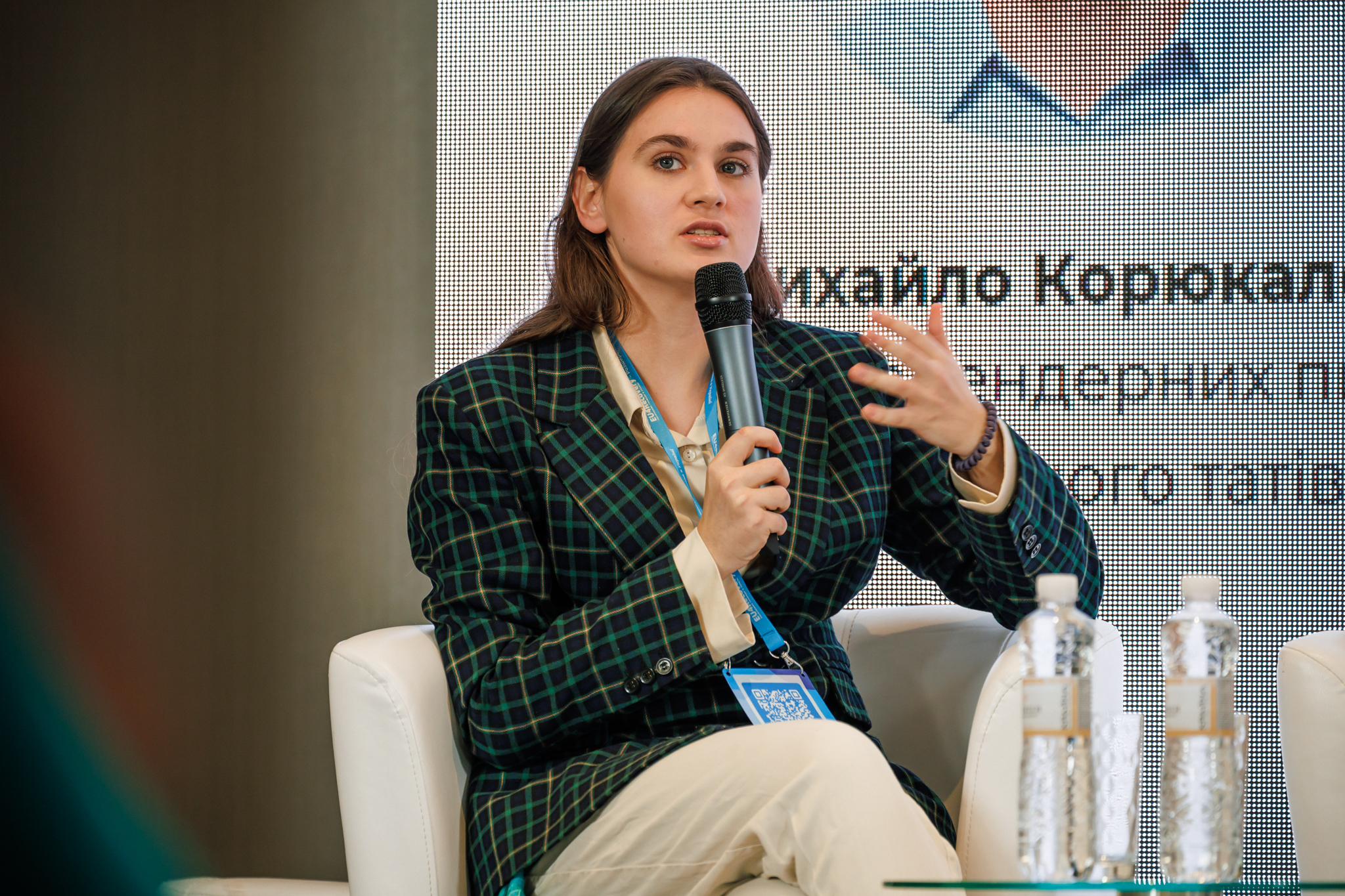
The panel's experts also underlined that both women and men suffer from GBV. Olha Frolova, a psychologist and coordinator of the TatoHub (DadHub) in Berdyansk, explained that "At TatoHub, we work with men to transform gender stereotypes about women and men. Unfortunately, according to statistics, men live shorter lives and commit suicide more often. The reasons for this include societal pressure and the inability to meet social expectations in terms of career, earnings, and physical health."
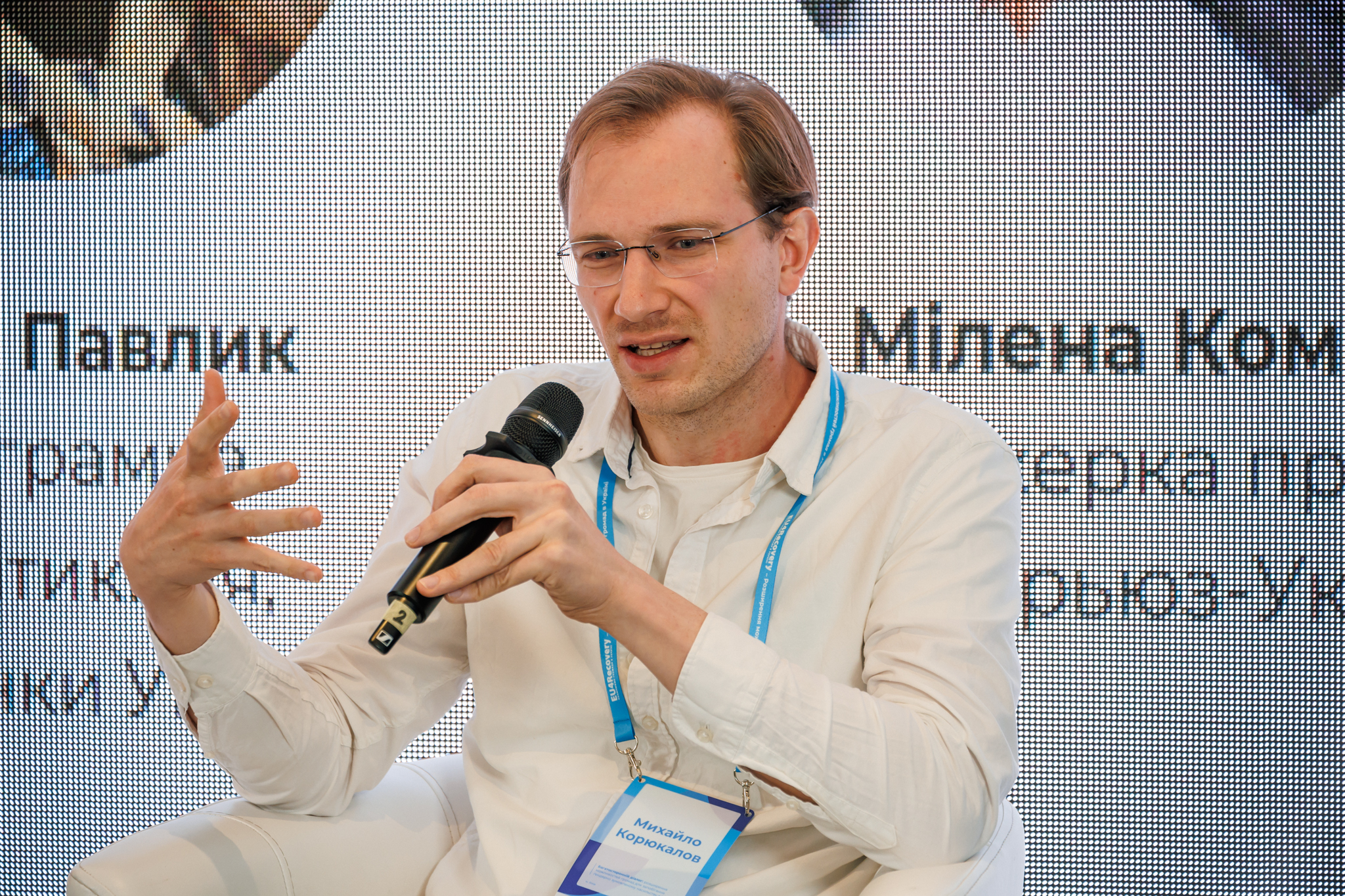
"Every average man will have more rights when there is more equality in society as a whole," says Mykhailo Koryukalov, an expert on gender issues and responsible fatherhood. "We can take steps towards equality every day. We have to talk to our friends and colleagues about gender issues, or put up posters with the hotline for victims of violence in offices. And for our children, we must set an example of a father who respects their mother, raises children without violence, and supports any of their hobbies, regardless of gender," Mykhailo said.
Milena Komar, project manager at Internews Ukraine, believes that we need to work on notions about gender roles. "Our mass culture pushes women and men to see the criteria for success in their lives as fulfilling only one role. For women, success means getting married and having a child, and for men, it means having a fat wallet. Toxic masculinity is often the result of these expectations. The first step should be to expand the number of social roles that our society considers successful. Both for women and men," Milena said.
CHALLENGES AND SOLUTIONS FOR PROMOTING GENDER EQUALITY IN THE REGIONS
Activists shared their experience of promoting gender equality on the ground. Yehor Antonov, a facilitator at the Slavic Heart Foundation from Kryvyi Rih, believes that a patriarchal model of relationships prevails in Dnipropetrovsk Oblast. This is due to high industrialisation and a lack of opportunities for women's development. Andrii Chastov and Yaroslav Utenko, youth activists from Donetsk Oblast, said that conflict-related sexual violence (CRSV) is an acute problem in their region, which has been at the center of hostilities since 2014. They believe that the problem will only get worse in the future, but also that youth activism is developing there despite the security challenges.
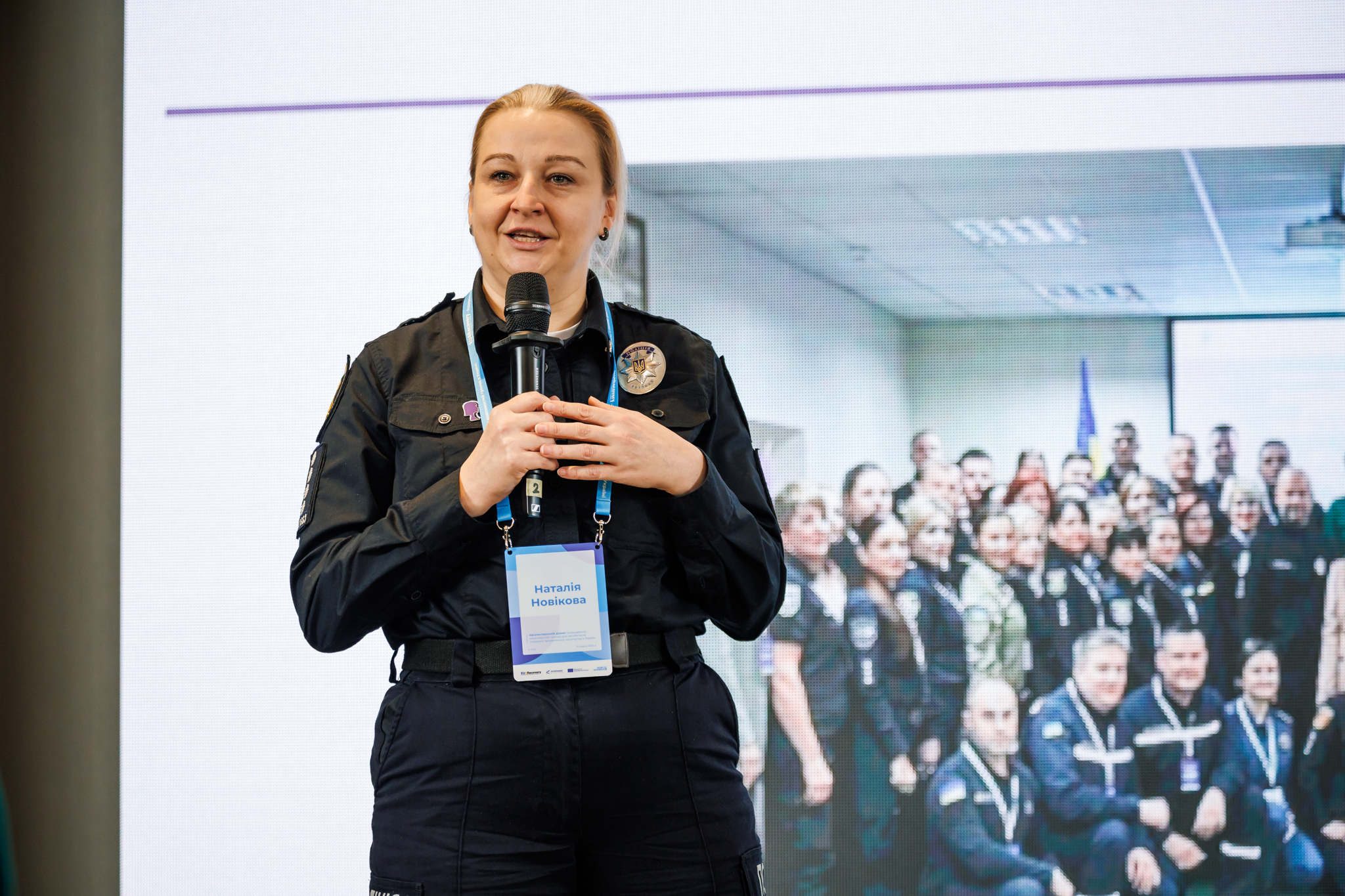
Members of Poltava Oblast's Patrol Police shared their experience of overcoming inequality in the law enforcement system. Natalia Novikova said, "As a commander, I have repeatedly faced sexist attitudes - as if women have no place in the police. Since 2017, we, the Ukrainian Association of Law Enforcement Offices, have been promoting gender equality in our field and raising awareness among police officers about providing gender-sensitive services to the public." Serhiy Lyakh added that their team has been working on ensuring inclusiveness of services and conducting training on gender-based violence.
Dialogue participants also discussed the challenges they faced in working with their target audiences. Mykhailo Snopenko, a representative of the Donetsk Oblast State Administration, shared the specifics of work near the frontline. "Many people are in a vulnerable security and economic situation, which stimulates the development of the illegal armed groups. Since the beginning of the full-scale invasion, the number of specialized services to support victims of domestic violence has significantly decreased. There is no lighting on the streets, and surveillance systems do not work, so the level of crime is increasing. We also lack human resources."
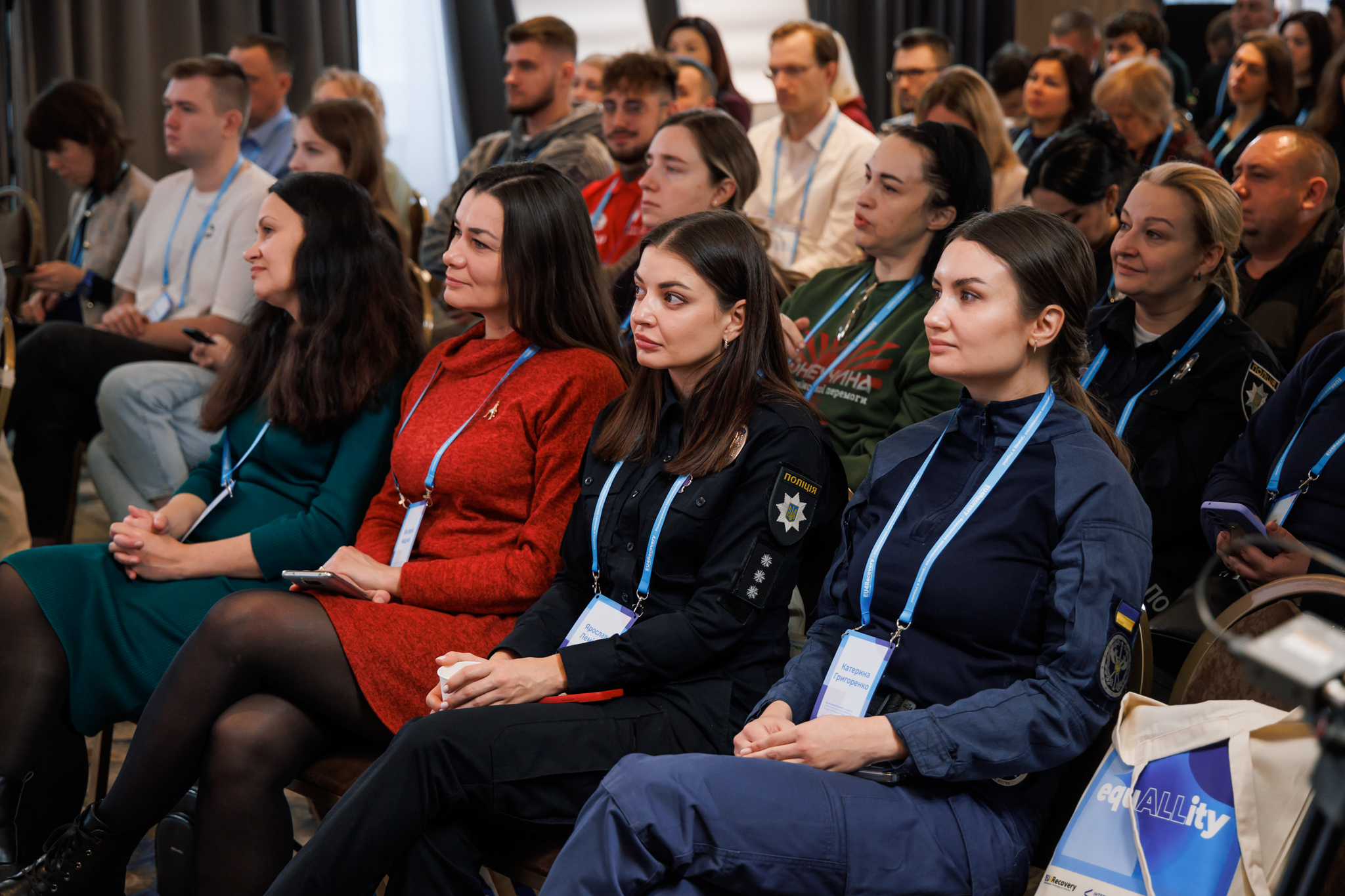
Kateryna Hryhorenko of the Gender Centre in Poltava and the Court Protection Service, said: "Due to the war, we have an urgent problem of conflict-related sexual violence, which, in my opinion, is akin to the genocide of the Ukrainian people in certain characteristics. But when all interagency cooperation bodies have a gender-sensitive component and a sufficient level of awareness, this ensures that the necessary assistance is provided to those who need it, and at the same time, that the perpetrators are brought to justice."
New courses on gender theory, improvement of existing ones, and launch of new educational programmes are just some of the initiatives being implemented at Dnipro Polytechnic University. "And it's working: students are actively interested in gender equality issues," explained Olha Nesterova, head of the university's philosophy department. "We also work with teachers and students to improve their physical fitness, self-confidence, and understanding of how to behave and get out of a situation. We have recently launched a self-defense course for young women," added Olha.
Natalia Korchak of the NGO Pravopolis explained how her group is currently working with host communities in Donetsk Oblast. "The main resource of our country is our people, and we need to help save each and every one of them. We have four values that are at the center of all our activities: gender equality, inclusion, human rights, and sustainability. That is, everything we do aligns with them."
In addition to discussions, the dialogue's participants jointly prepared an action plan to prevent GBV, proposing steps to change attitudes towards inequality and violence in local government, education, law enforcement, and civil society.
The video recordings of the multilateral dialogue are available at the following links: Discussion 1, Discussion 2.
The event was organised by Internews Ukraine and supported by the United Nations Entity for Gender Equality and the Empowerment of Women (UN Women) as part of the EU4Recovery - Community Empowerment in Ukraine (EU4Recovery) project, with financial support from the European Union.
This publication has been prepared as part of the EU4Recovery project, but its views and contents do not imply official endorsement or acceptance by the EU or the United Nations.