
PRESS RELEASE
International Conference on Media Literacy and Media Self-Regulation takes place in Kyiv
On 25-26 April, the International Conference on Media Literacy and Media Self-Regulation is held in Kyiv. The primary aim of this conference is to enhance media literacy and strengthen media self-regulation frameworks to ensure the media freedom and integrity of Ukrainian media outlets.
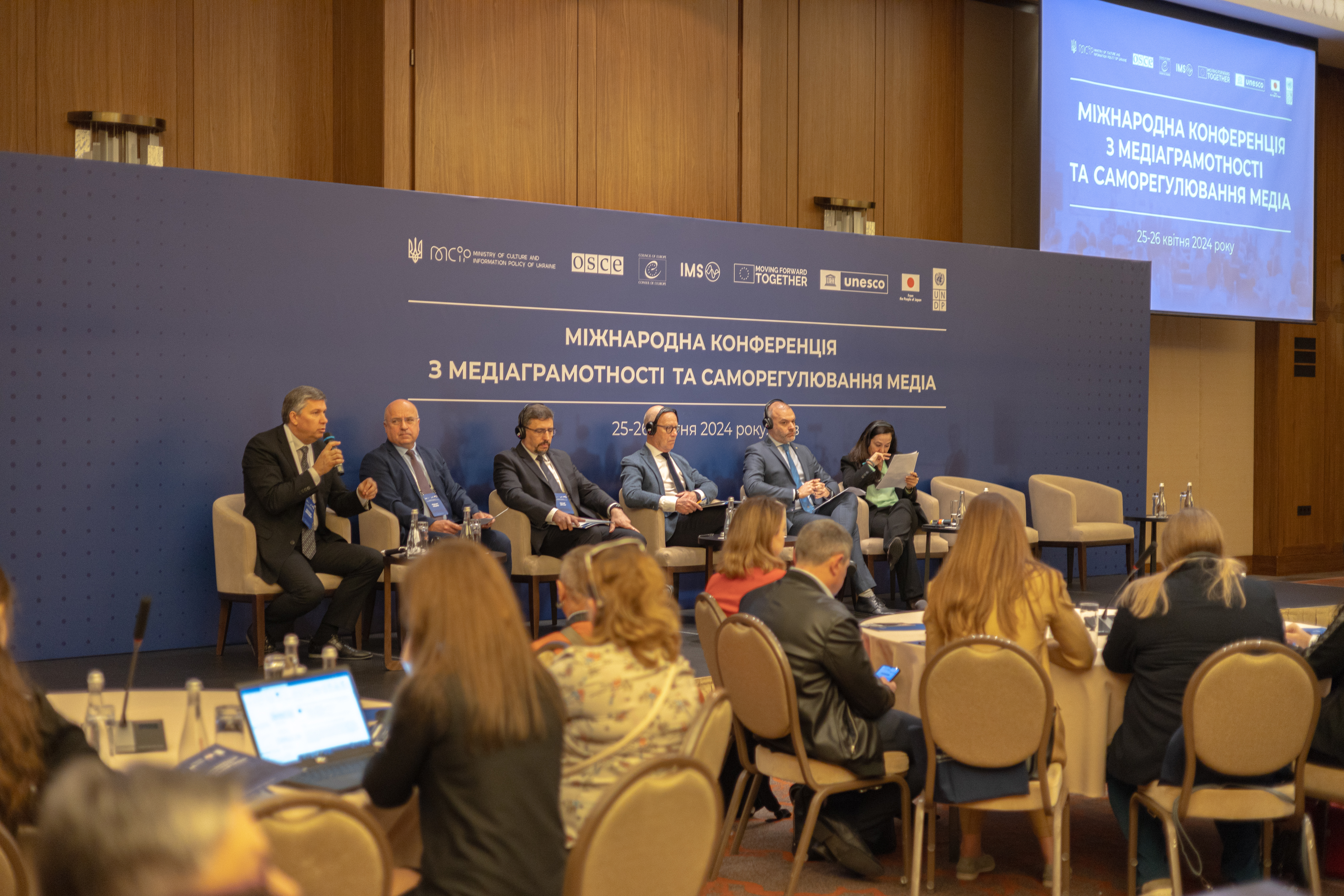
The conference is co-organised by the Delegation of the European Union to Ukraine, the OSCE Support Programme for Ukraine, the Council of Europe Office in Ukraine, International Media Support, the United Nations Development Programme in Ukraine, UNESCO in Ukraine, and the Ministry of Culture and Information Policy of Ukraine.
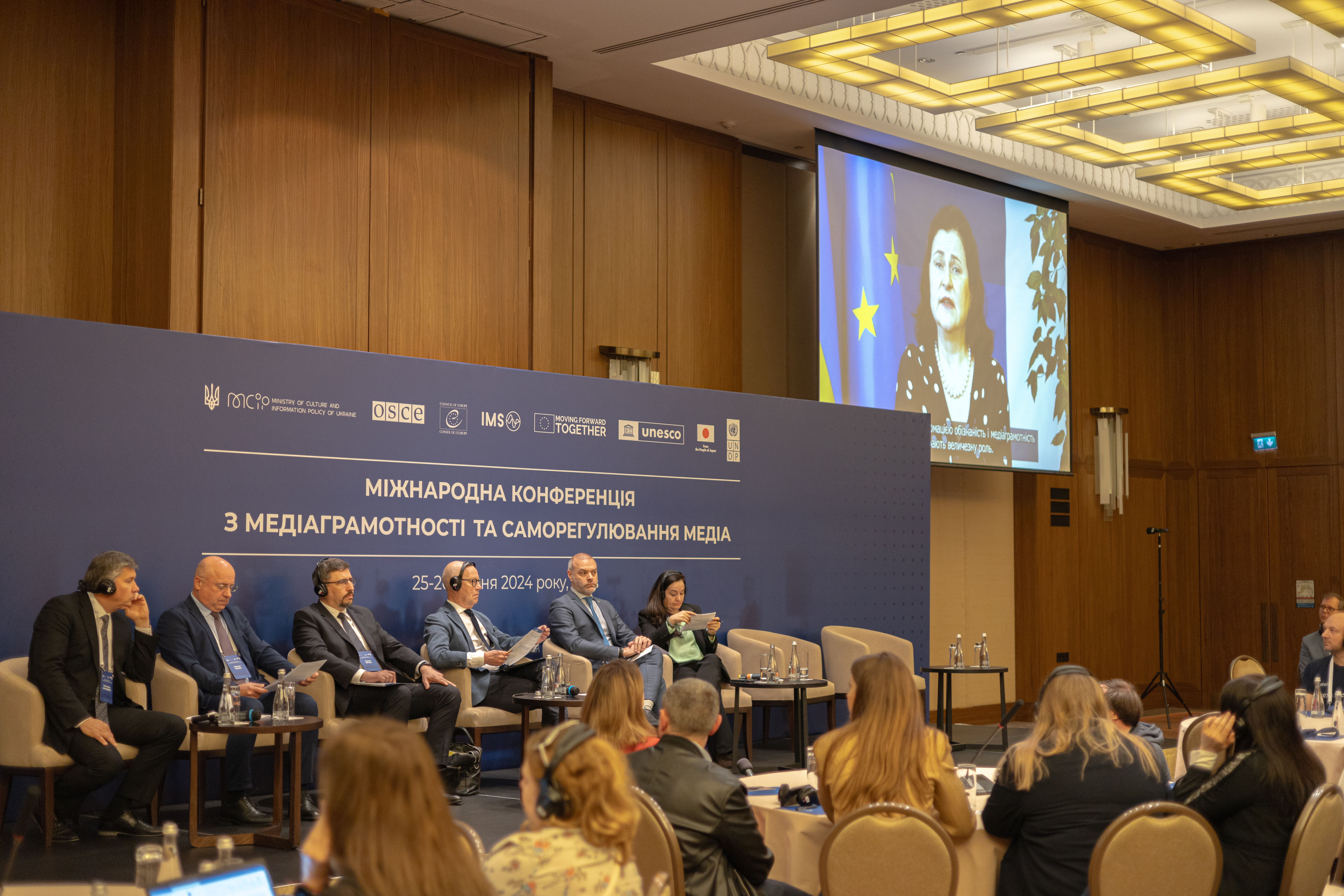
In the opening speech, the EU Ambassador to Ukraine Katarína Mathernová declares: "In tackling disinformation — awareness and media literacy play a huge role. Even more in the context of the Russian full-scale invasion — we at the EU are well aware of the threat represented by the continued attacks of Russian disinformation. Overall, the challenge ahead is so big that we have to act together — with a whole of society approach. This is why these two days of conference are even more important. They gather together all the key national and international stakeholders to foster even greater collaboration among all actors - including government, media organisations, educational institutions, and civil society."
Representatives of the EU Delegation to Ukraine, the OSCE Support Programme for Ukraine, the Council of Europe Office in Ukraine, International Media Support, United Nations Development Programme in Ukraine along with representatives of the Ukrainian government, committees of the Verkhovna Rada, educational institutions, civil society organisations, international non-governmental organisations, think tanks, as well as media professionals and international delegates, are participating in the event.
Teresa Ribeiro, Representative on freedom of the media OSCE says: "The objective of this conference — to foster societies that are both resilient and well-informed. Amidst the spectre of a media landscape marred by attempts to undermine trust, media literacy is paramount, with a citizenry that can discern truth from falsehood, and reality from manipulation. Such skills are vital for navigating, questioning, and understanding the vast array of information available to us. They serve as fundamental defenсes against disinformation, thus protecting democracy, freedom, security, and the critical importance of truth and factual accuracy".
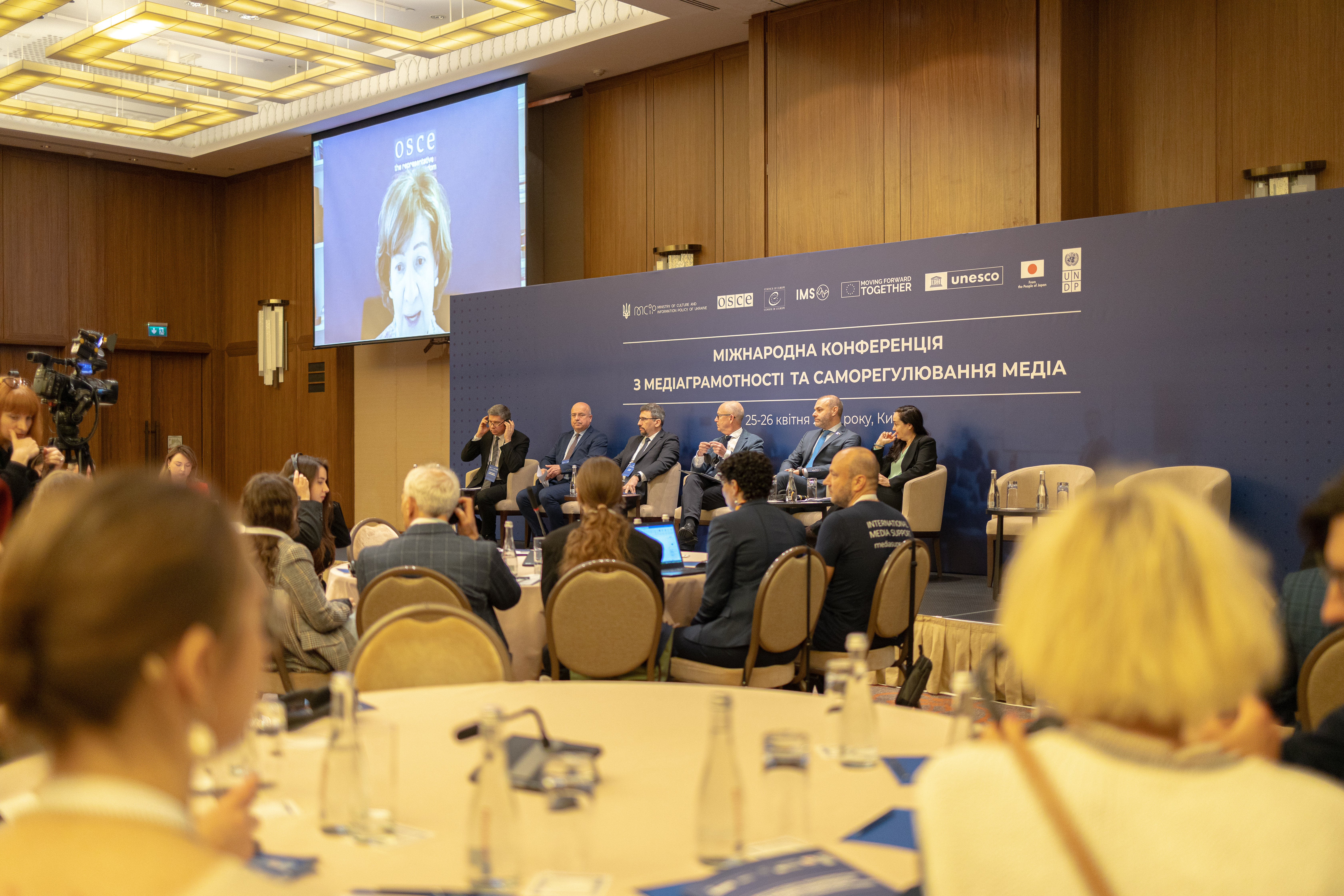 At the conference, the participants discuss various facets of media literacy and self-regulation
- Media literacy at the national level: problems, decisions, strategies;
- The best practices and innovative approaches to media literacy;
- Effective media literacy: how and what to measure;
- Achievements and challenges in self- and co-regulation, determination of needs and obligations;
- Gender policy in the media as a driver of social change in building equality.
Acting Minister of Culture and Information Policy of Ukraine Rostyslav Karandieiev stated: "The Ministry of Culture and Information Policy is making efforts to implement the information security strategy, as well as developing a strategy for the development of media literacy at the level of society. We see it as our key task to educate a person to understand that any information that should be perceived critically and perceived as vitally important. That is why it needs to be filtered, checked, and verified".
Maciej Janczak, Head of the CoE Office in Ukraine declares: "The Council of Europe continues to work on media literacy and combating information disorders through interconnected standards, including the upcoming Convention on Artificial Intelligence, standards on hate speech, education, youth work, and many others. For instance, the Council of Europe Steering Committee on Media and Information Society, or CDMSI, is actively engaged in issues related to media literacy and self-regulation, and many of their standards and guidelines are now available in Ukrainian thanks to our media project. As co-organisers of this event, we are delighted to be joined by our esteemed partners, who share the same priorities with the Council of Europe and the same values, as well as believe strongly in the importance of exchanges among all stakeholders concerned — discussions on best practices, challenges, and potential solutions with peers from different parts of Ukraine and the region. From the Council of Europe's and the Ukraine Office's perspective, I would like to reiterate our support both to the Ministry of Culture and Information Policy and the Ukrainian media community in advancing their national and local efforts"
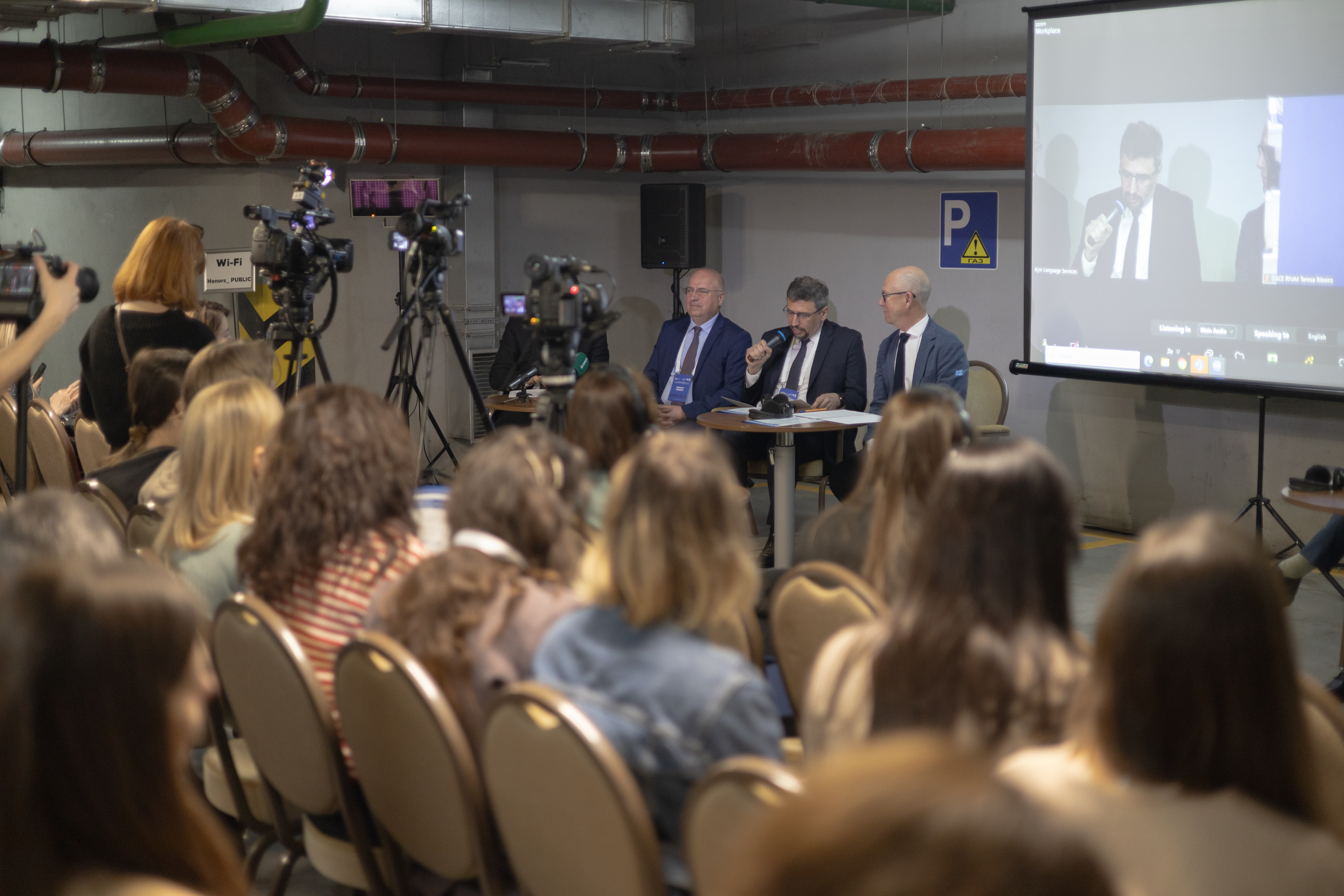
The participants of the conference aim to focus on the development of a sustainable media policy capable of resisting modern disinformation challenges in the conditions of Russia's military aggression against Ukraine.
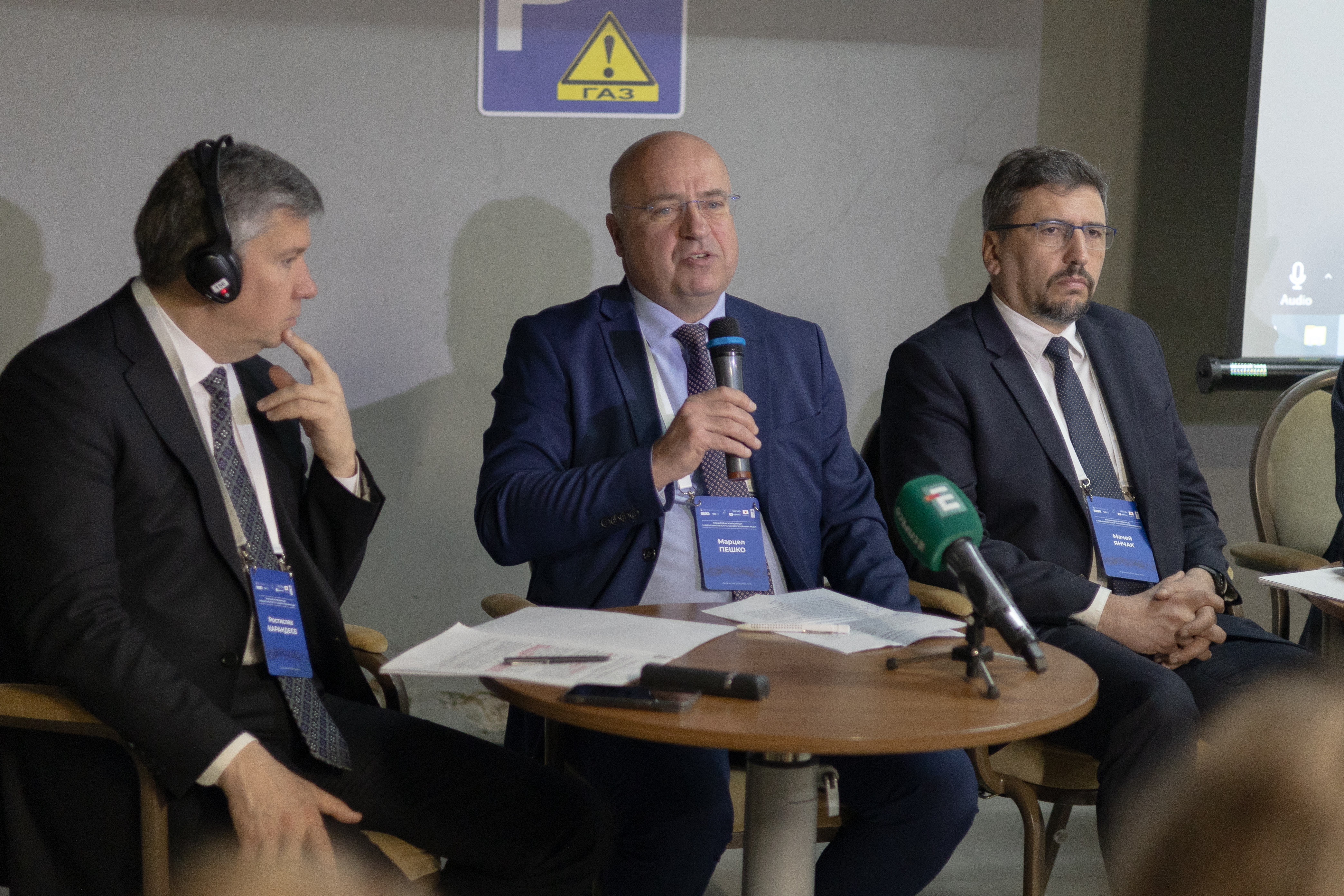
Special Representative of the OSCE Chairmanship — Project Coordinator in Ukraine Marcel Peško says: "I am very happy, that this event gathered such a powerful coalition of international organisations, Ukrainian authorities, parliament and civil society, journalists and media experts. Disinformation is treacherous weapon, as it targets vulnerabilities of open democratic societies, enhances their internal conflicts. I hope this event will help you not only to look for weaknesses or drawbacks, but also to assess the good things you've achieved here in Ukraine. You will also bring your experience and your best practices to enrich and strengthen the European family".
Christophorus Politis, UNDP in Ukraine Deputy Resident Representative quotes: "Guarding against the surge of disinformation requires a dual approach: crafting a sophisticated strategic communication framework, and fostering a society grounded in media literacy. At UNDP in Ukraine, we are dedicated to this bidirectional strategy, bolstering both government and civil society efforts to shield Ukraine and its people from damaging information influences. Our commitment has been unwavering, as we have supported the Ukrainian Government in countering disinformation since 2020, as well as boosting its strategic communication capabilities in alignment with the EU Association Agreement and the 2030 Agenda for Sustainable Development".
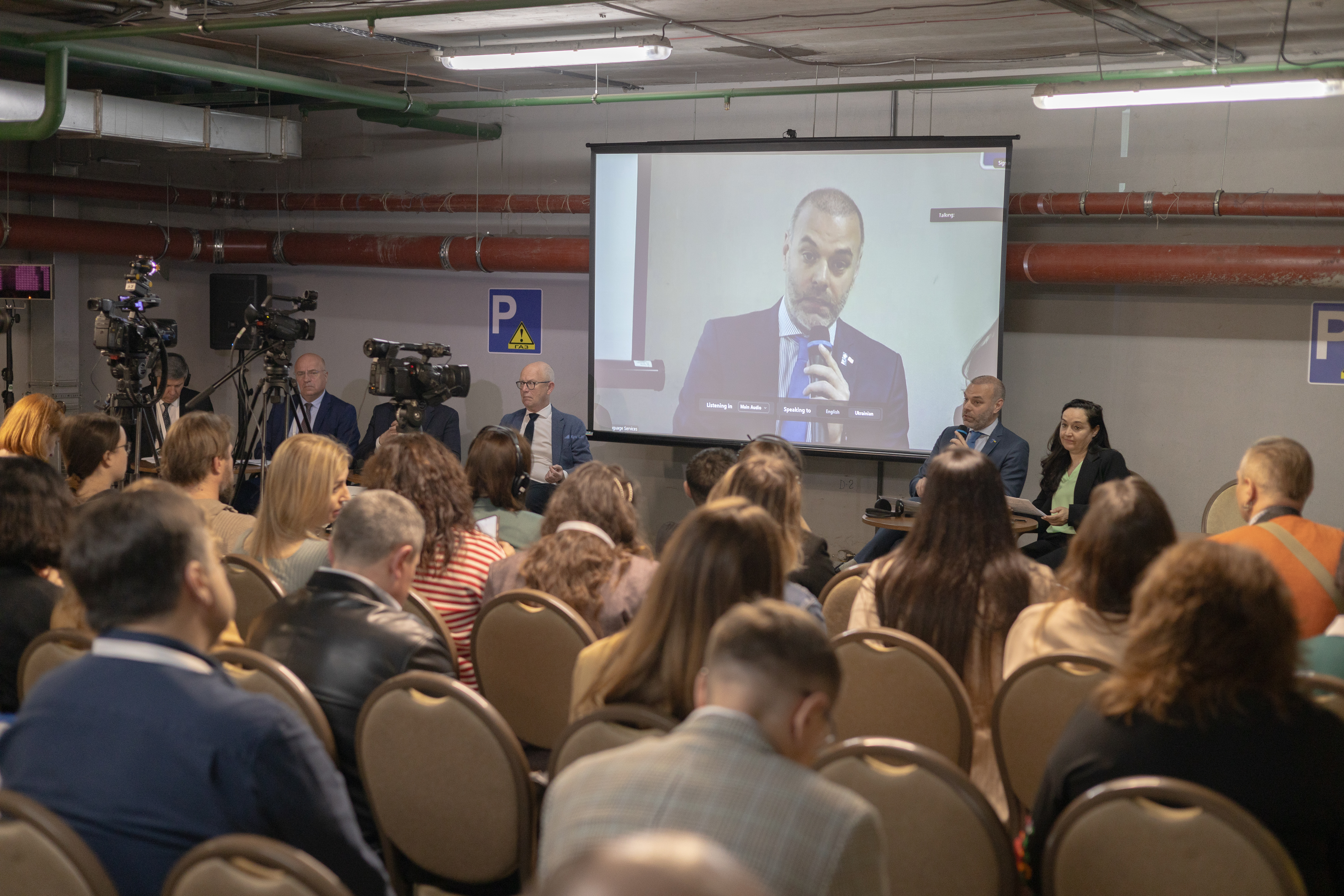
Online broadcasts as well as the recording of the conference in two languages are available at the following links: