

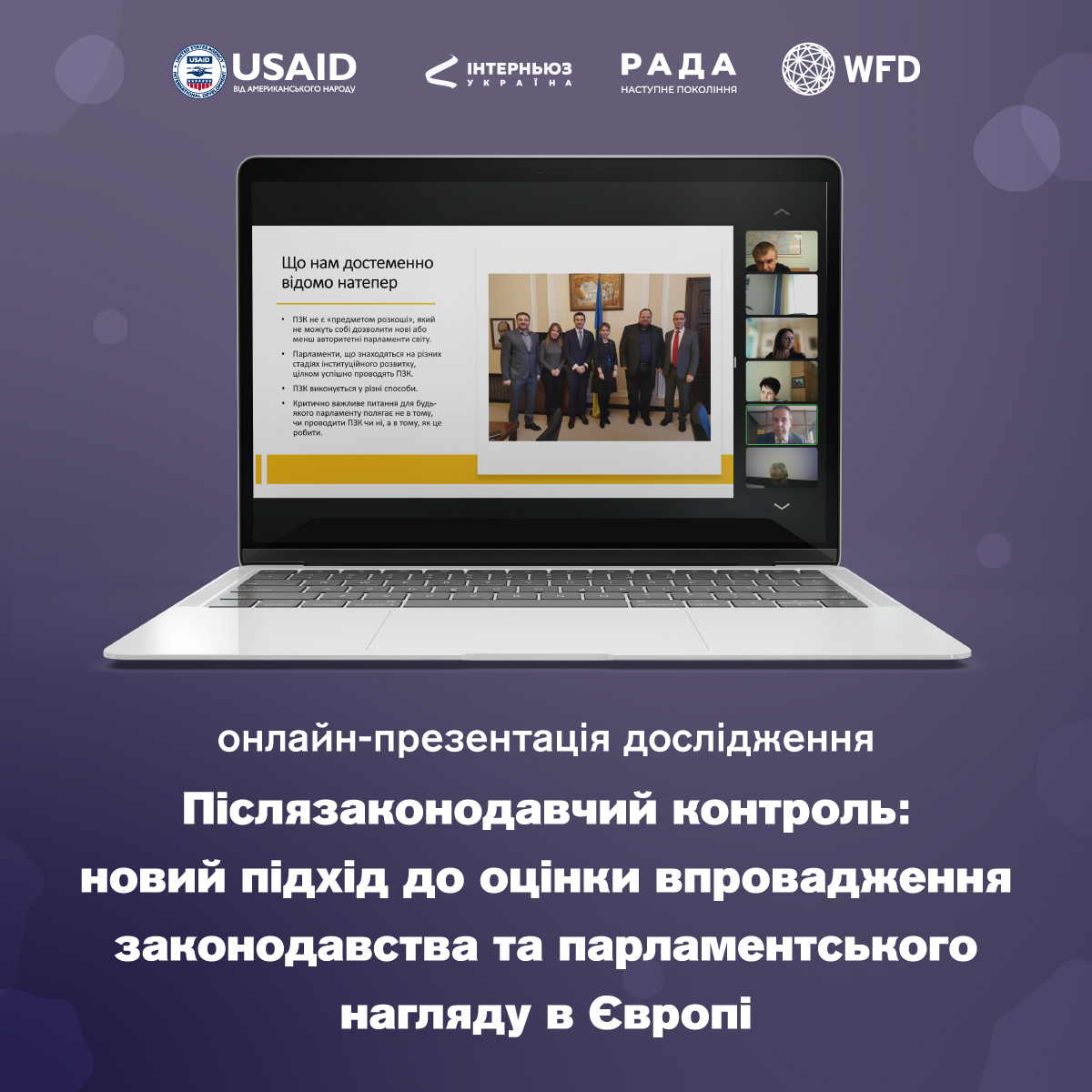
Within the framework of USAID RADA: Next Generation Program, experts from the Westminster Foundation for Democracy (WFD) analyzed European practices of post-legislative scrutiny and developed recommendations for the possible application of such an approach in Ukraine. They put down their findings and conclusions in the research "Post-Legislative Scrutiny: New Approach to Assessing Legislation Implementation and Parliamentary Oversight in Europe" and presented it during an online meeting on October 5, 2022.
What is Post-legislative scrutiny? Post-legislative scrutiny (PLS) is the practice of monitoring the implementation and evaluating the impact of laws. The aim is to ensure that laws benefit citizens in the way originally intended by lawmakers. PLS looks at the enactment of the law, whether the legal provisions of the law have been brought into force, how courts have interpreted the law and how legal practitioners and citizens have used the law. These are two dimensions of PLS: (1) to evaluate the technical entrance and enactment of a piece of legislation; (2) to evaluate its relationship with intended policy outcomes.
Both state bodies and civil society organizations can be involved in post-legislative scrutiny. PLS is increasingly recognized as an essential aspect of parliament's control and legislative functions and an integral part of the legislative cycle.
Sixty people took part in the online presentation of the research and further discussions, including assistants of MPs, the Secretariat staff of the Verkhovna Rada of Ukraine, and employees of the Cabinet of Ministers of Ukraine. Together with experts, they discussed which model of post-legislative control is the most suitable for Ukraine and who should be involved in this process, particularly how public organizations can interact within PLS.
In the summer, USAID RADA: Next Generation Program provided ten employees of the VRU Secretariat with an online course training on post-legislative scrutiny. Later, it is planned to carry out post-legislative scrutiny with VRU "model committees" that cooperate with the Program.