

Just a few years ago, Polina studied at a school in Melitopol. It is a city in southern Ukraine that fell under Russian occupation after the invasion in 2022. She had to flee due to the brutality of war, and now, whenever Polina speaks, she ends with the words “Melitopol is Ukraine!”
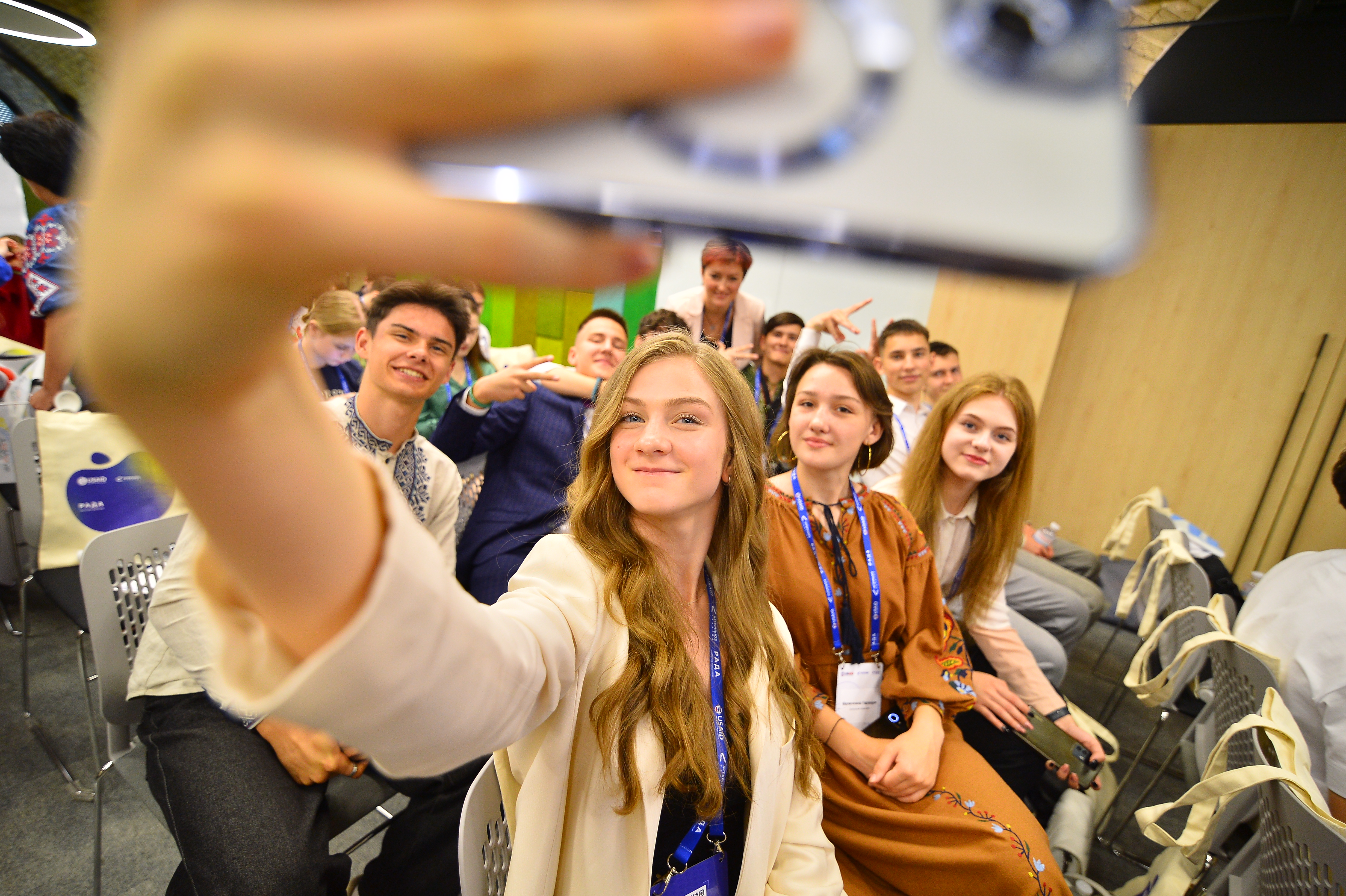
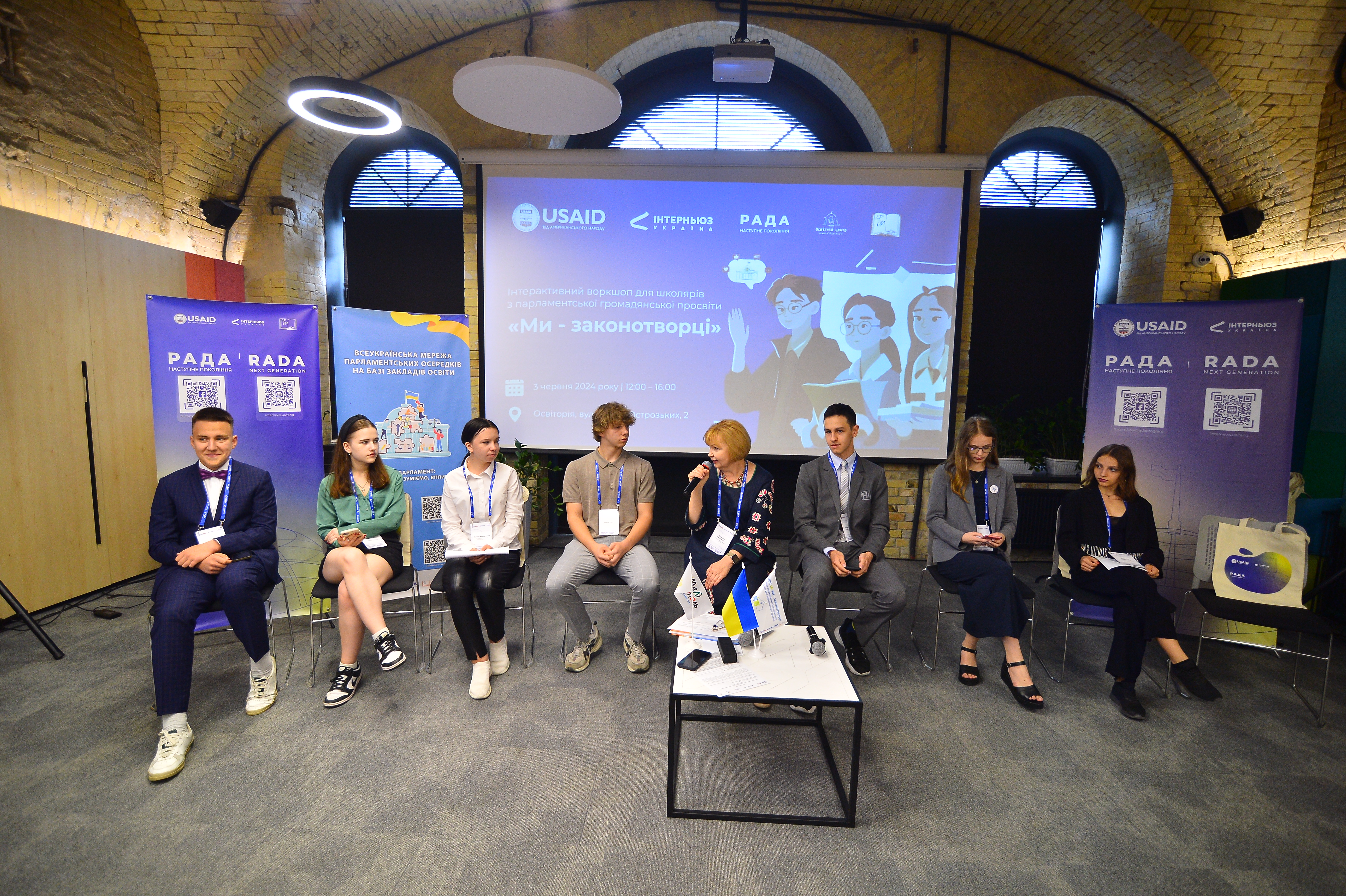
Today, Polina is one of hundreds of Ukrainian youth actively participating in a gaming exercise where youth role-play as Parliamentary lawmakers. The “We are Lawmakers” game is the work of the USAID “RADA: Next Generation” Program, which prioritizes the development of civic parliamentary education in Ukraine, with a focus on young people.
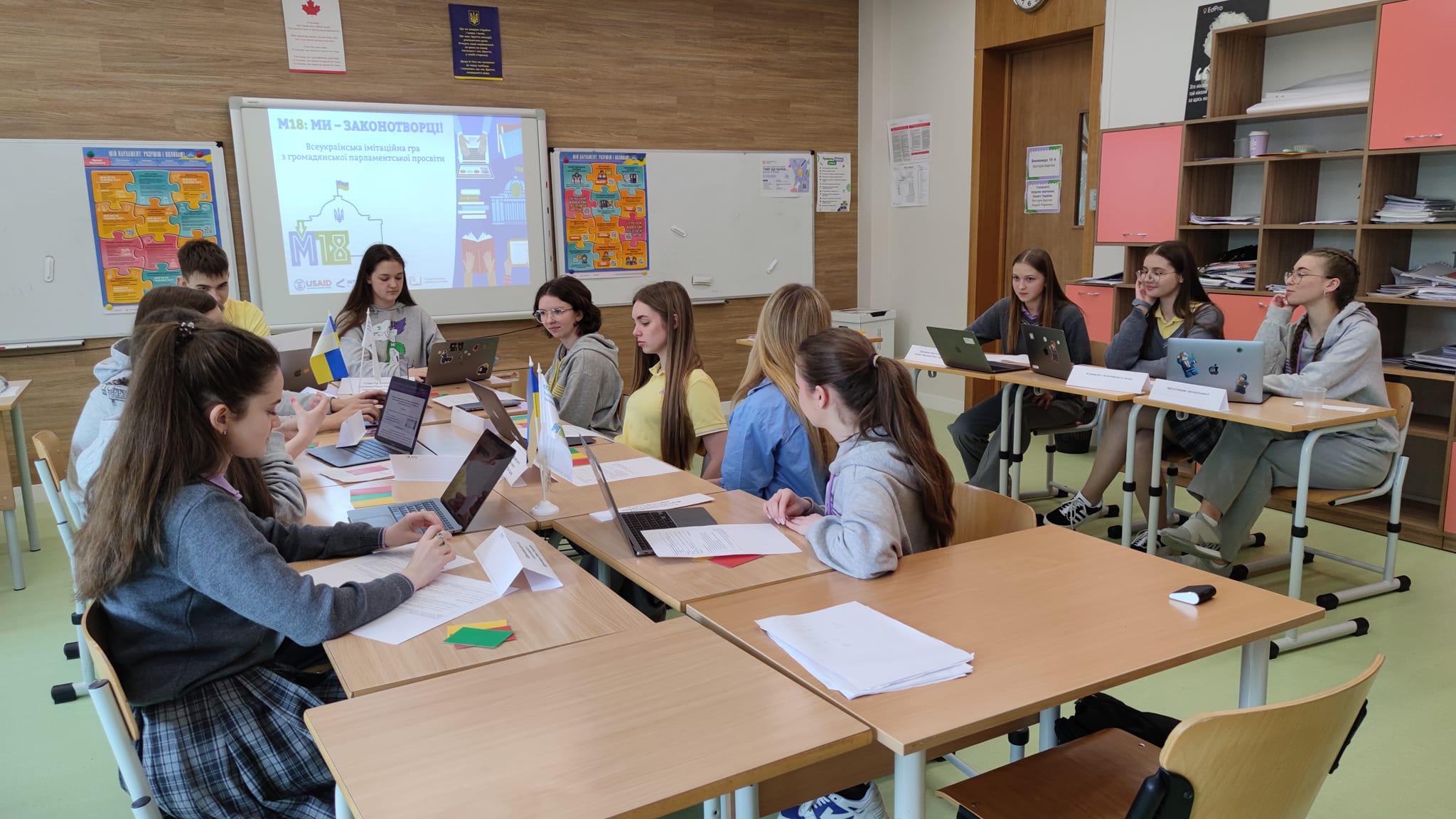
In the game, high school students (mostly aged 14-17) pretend to be members of the Ukrainian Parliament, imitating committee work, debating socially significant issues, collaboratively seeking solutions, drafting bills, and voting on them. This hands-on approach allows youth to understand the role of the Verkhovna Rada (Ukraine’s Parliament) in shaping state policy and discover how citizens can influence politics in Ukraine.
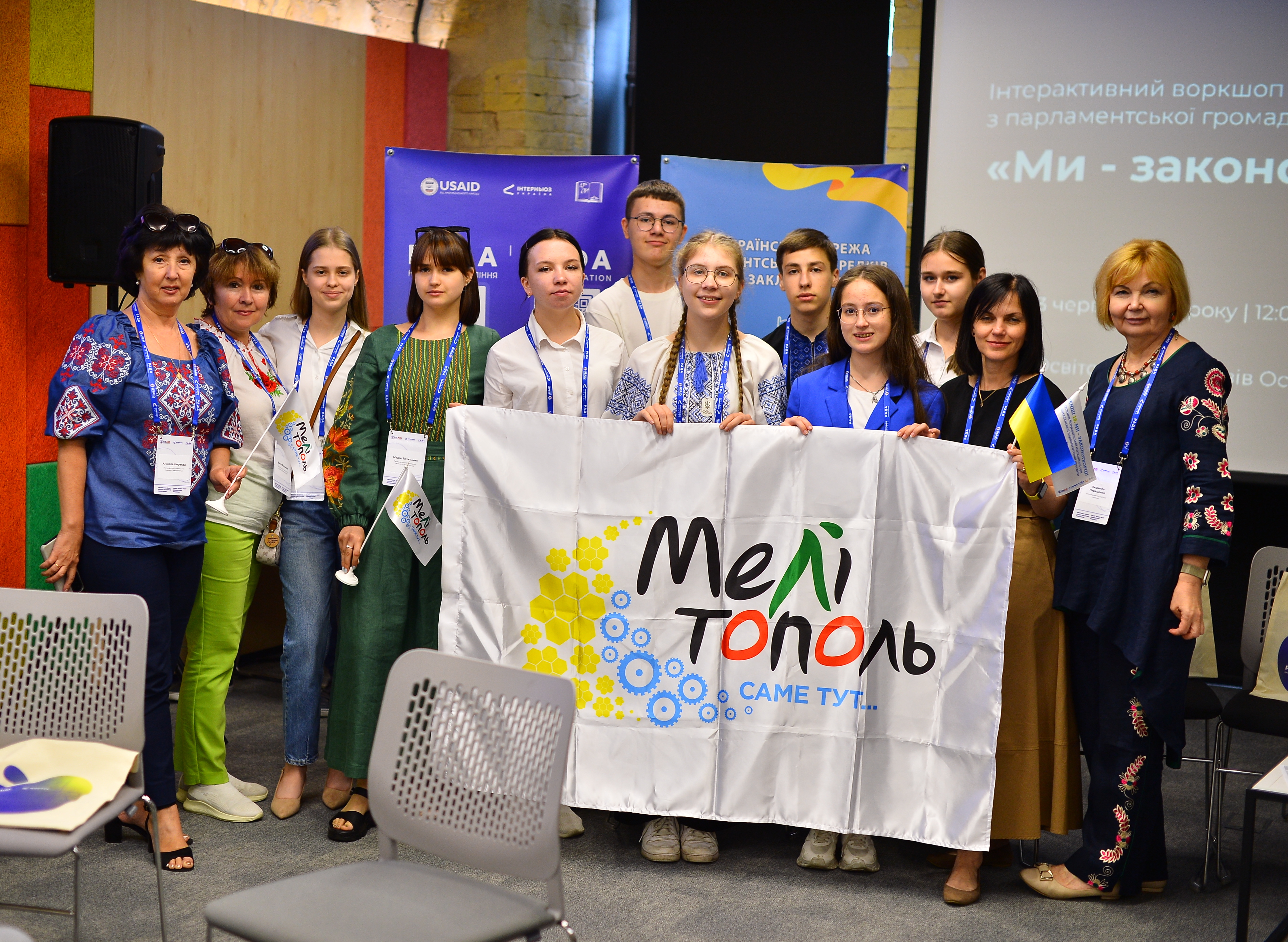
Polina’s mock committee focused on an issue under debate by lawmakers around the world today. “We supported the petition to legalize euthanasia in Ukraine for medical purposes. I feel that this topic is significant and touching. We had many discussions and shared our ideas extensively during meetings with MPs,” Polina said. “Now, we understand that society is not quite prepared for such changes. However, we will continue to work on it as we are the new generation. Among us are future lawyers, doctors, psychologists – and MPs too! We will continue working to develop our country.”
 Youth can drive meaningful social change and create a thriving democratic future. USAID is committed to assisting future generations to expand their capacity to build strong democratic institutions.
“We aim to design civic education so that children become responsible citizens who understand how the Parliament works, how the political process unfolds, and why it matters. Ukraine is a European state, and in the EU, no decision can be made without the participation of citizens. Thus, we are jointly building a better state in the interest of the citizens, one in which there will be mutual trust and confidence in parliament, government, and political parties,” said Igor Kogut, the USAID “RADA: Next Generation” Program’s Senior Strategic advisor.
More than 500 Ukrainian students participated in the game. Over several months, pupils from 43 schools in various regions of Ukraine learned how to write petitions and draft bills. They simulated working in three parliamentary committees – on anti-corruption policy and budget, medicine, and education and science. The choice of these committees was not random. Before the game was designed, the USAID “RADA: Next Generation” Program surveyed 3,600 students to identify their priorities for Ukraine’s development and recovery. While youth said their top priority is to win the war while also helping the brave Ukrainian soldiers, they ranked the economy, medicine, and education as the most important development issues.
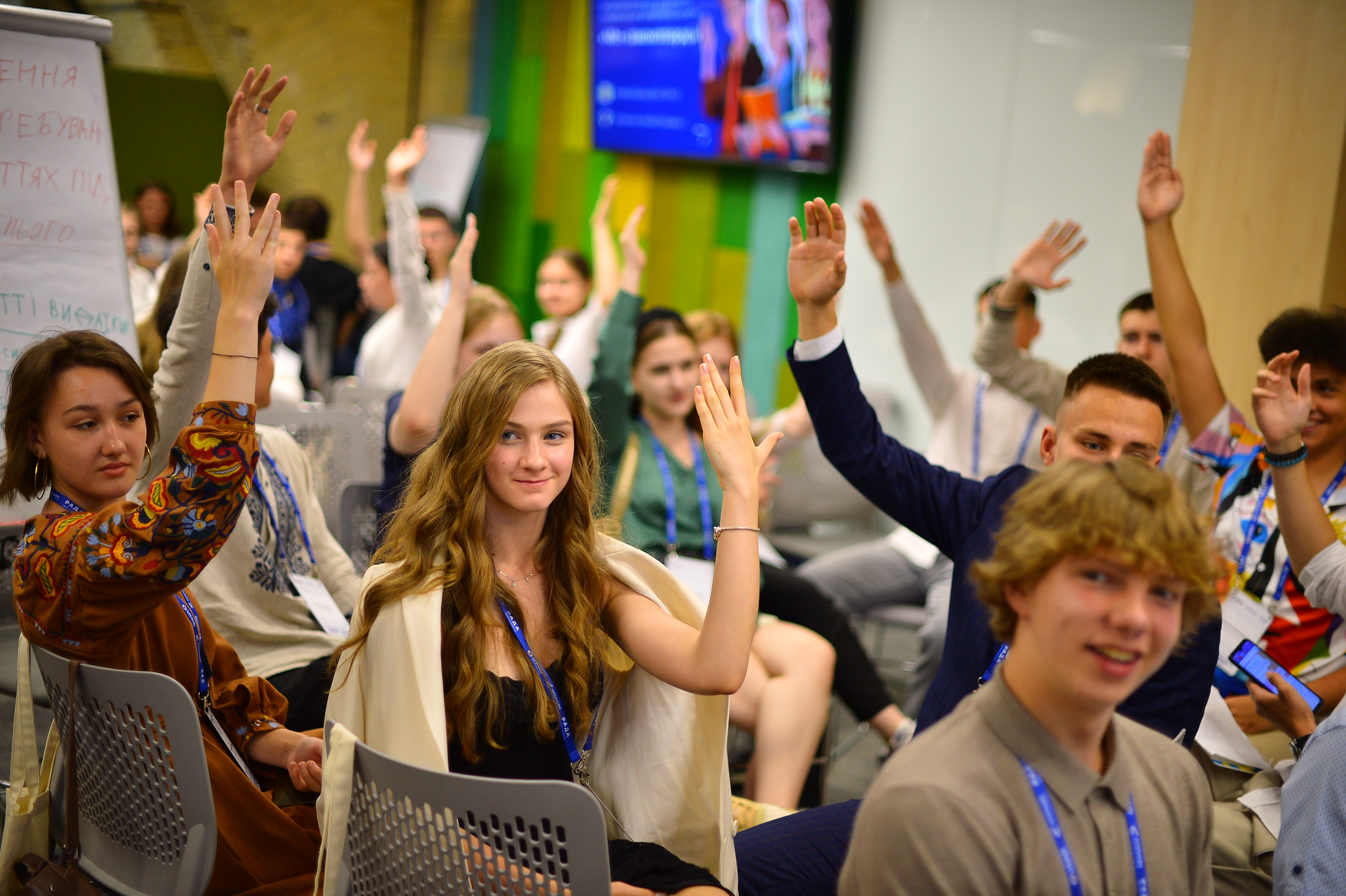
“Our team realized how much it takes to govern a state. Being elected by the people is not just a right but a great responsibility. That is why we need to learn about parliamentarism right now,” shared Nazar Lutsenko, a student at Irpin Specialized School No. 2.
“We worked in the Nation’s Health Committee and drafted a bill titled ‘On Regulating Psychological Assistance to the Soldiers.’ Our country is now fighting for its independence and sovereignty, and most military personnel were ordinary people like us just a few days ago. Let’s protect them too!” expressed Anastasia Kostenko, representing the team from the Kyiv Junior Academy of Sciences and Specialized School No. 269.
 The USAID “RADA: Next Generation” Program involved Ukrainian MPs throughout all stages of the game’s development. For instance, before the game started, MPs Ivan Krulko, Artem Dubnov, and Roman Hryshchuk met with students and explained how to work in committees. According to Hryshchuk, this game “develops critical thinking and resilience to propaganda” because resisting is easier when you understand how the Parliament actually works. MP Natalya Pipa personally evaluated the students’ bills and invited some young “colleagues” to meet for further discussion as she found their ideas reasonable and impressive.
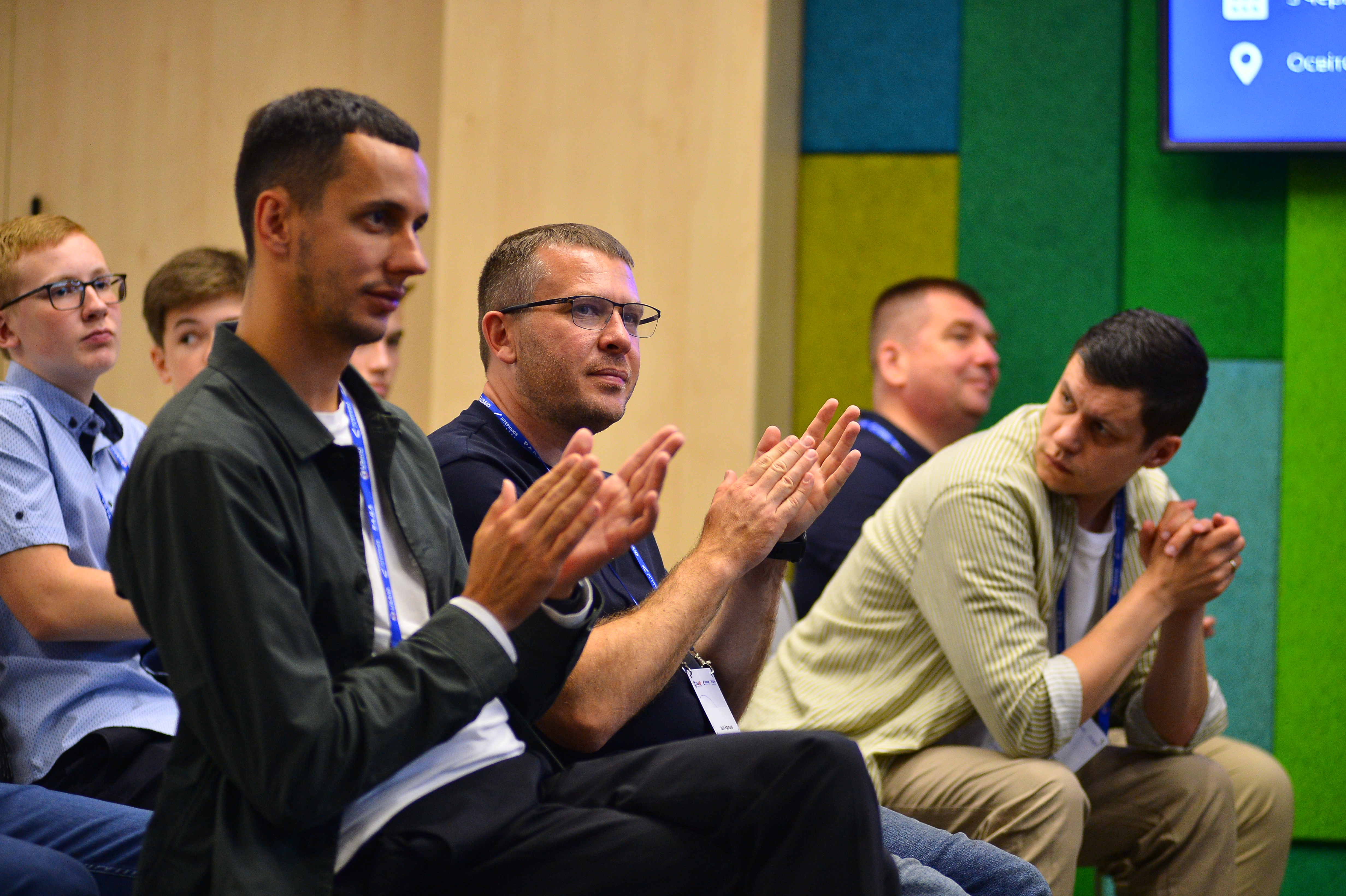 The “We Are Lawmakers” game received strong support from the leadership of the Ukrainian Parliament. During the Youth Democracy Summit organized by the “RADA: Next Generation” Program, the First Deputy Chairman of the Verkhovna Rada, Oleksandr Korniyenko, stated:
“Together, we will rebuild the country, win the war, and join the EU. You will live in the EU for a longer time than we will, so you must become accustomed to being Europeans: to understand what democracy is, how to maintain it, and how the government works to control it. Therefore, such educational projects need to be scaled up. The Verkhovna Rada will ask partners to spread this experience of democracy through games and interaction because it is the best fit for educating young people.”
Overall, Ukrainian pupils designed 39 bills within the game, covering various topics – from enhancing the role of motivation letters during university admission to more radical ideas such as legalizing euthanasia.
Youth are the face of the future. The values they embrace and the environment in which they grow will have a significant impact on global development. Only quality investments ensure a successful future. One famous proverb says, “You reap what you sow.” Thus, democracies should already be thinking about how the next generation will develop. A survey supported by USAID showed that 89% of Ukrainian youth aged 16-35 believe in a hopeful future for Ukraine, 98% in its victory in the war, and 79% want to contribute to its reconstruction. It seems Ukraine can rely on its future generation.