

"Politicians who rely on expertise and analysis make quality decisions, making the state system sustainable and stable. Then the whole country works better. Better expertise provides more effective and consistent decisions, and voters benefit from that," says Nataliya Pipa.
Ms. Pipa is a member of Ukraine's Parliament who advocated and contributed to establishing the Research Service of the Verkhovna Rada of Ukraine (RSVRU). This parliamentary institution is developed to provide the Parliament with comprehensive informational, analytical, and training support. For example, members and employees of the Verkhovna Rada of Ukraine (VRU) can request various information materials and research to deepen their expertise in any topic. The VRU Legislation Institute performed some of these functions before, but it was decided to reform it regarding modern needs and challenges.
The final institualization RSVRU on August 25, 2022, was a great success because it was not an easy task. It took years from admitting the necessity of such a parliamentary think tank to active high-level discussion and agreement on the implementation. For over six years, USAID programs advocated this initiative, conducting a powerful information campaign and raising MPs and VRU staff awareness of research services' roles and functions worldwide.

"Any initiative in the Parliament cannot be easily promoted, even the simplest one. There will be those to whom it will not seem as important as others. Issues of VRU capacity and information products are often postponed. However, this complexity does not mean that we should give up. Good initiatives, especially those related to analytics, education, information, or more effective work of the Parliament, need to be implemented. We must constantly improve VRU structure and capacity," says the other Ukrainian MP and RSVRU advocate, Olena Moshenets.
Ms. Moshenets felt the necessity for a high-quality research center in 2019 when many people without broad political experience became members of the Parliament at the request of Ukrainian society. She recalls that "during the turbo-mode, newly elected MPs had to be aware of many issues for a very limited time." Thus, her colleagues urgently required informational and analytical support not to disappoint their voters. Now, this gap seems fulfilled.
Besides giving its expertise, RSVRU enables MPs, their assistant consultants, and the VRU Secretariat staff to develop professionally. They can ask RSVRU to organize training, master classes, and seminars or to involve concrete specialists to address their practical needs or enhance their skills. Both MPs note that voters constantly raise requirements for the Parliament, so MPs always have to grow professionally to uphold those standards. Now, this request is higher than ever because the brutal russian war in Ukraine does not give MPs the right to make any mistakes.
"The voter becomes more demanding, educated, and experienced, and this trend will continue. Our voters have become much wiser over the last six months. That is why the requirements for MPs will not only be high but also to a certain extent strict," Ms. Moshenets explains. Her colleague, Nataliya Pipa, adds that "effective decisions during the war are even more valuable than during peacetime. And MPs must make some decisions quickly to enable the state to withstand the aggressor's blow." Nonetheless, speed must go hand in hand with quality, and the latter can be achieved with RSVRU support.
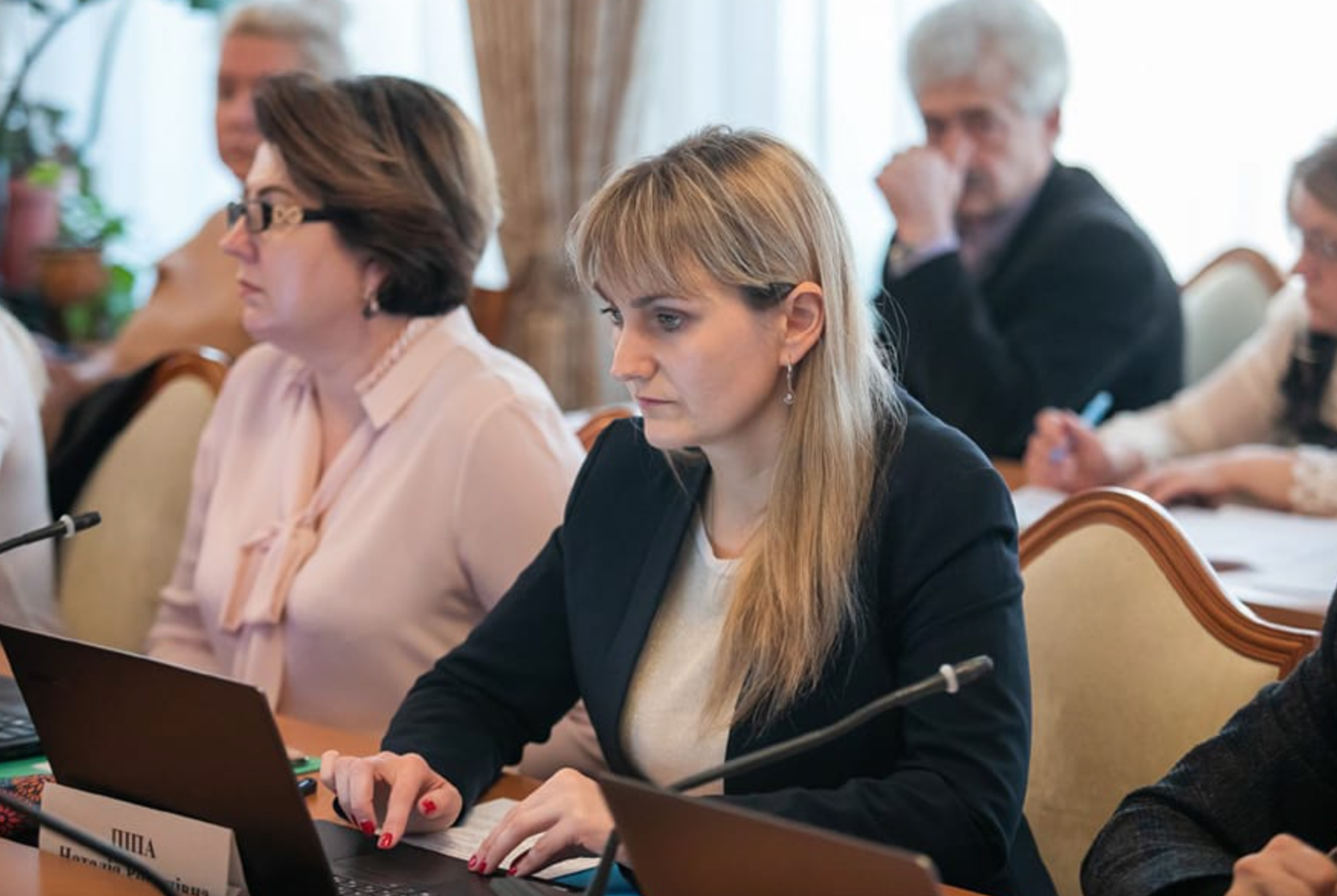 Now, the VRU Secretariat is taking final steps to launch this institution, though its further development remains an important long-term task. Ms. Pipa emphasizes that she advocated parliamentary research service reforms "not for form's sake, but the sake of meaning." She wants the institution to become truly effective in the future and learn from the best global practices.
The USAID RADA: Next Generation Program helps RSVRU implement these wishes. In August, for example, the Program organized a study visit to the US for RSVRU representatives. They met colleagues from the US Congressional Research Service and agreed on joint educational activities and cooperation in the research field. Additionally, RSVRU representatives established contacts with the House Democracy Partnership and announced their intention to sign a memorandum on cooperation.
MPs stress that RSVRU can improve their work, legislation, and communication with Ukrainian society. "Our voters have the right to receive quality and objective information. And while they are protecting us on the front line, we will try to do our best on our parliamentary front," Ms. Moshenets says.
While RSVRU institualization in itself can be called a victory, the war does not give time for long celebration and transition. It requires putting this powerful institution on track and using its potential for the sake of the Parliament, the voters, and Ukraine.