

Within the framework of the USAID RADA: Next Generation Program grant initiative, the NGO “Institute Respublica” helped the Verkhovna Rada Committee on Organization of State Power, Local Self-Government, Regional Development and Urban Planning and its Chairperson Olena Shuliak organize public consultations on "Effective and Transparent Recovery Policy" related to the draft law "On the Basic Principles of Restoration."
During three online discussions held in July and August, we managed to engage more than 600 people - citizens, businesses, experts, representatives of the government and international organizations, local governments across Ukraine, MPs, international partners and donors.
The public consultations covered the following topics:
"All proposals received during the public consultations have been formalized in a report and will be submitted to the Ministry of Infrastructure. We hope that most of them will be taken into account in the draft law “On the Principles of Restoration of Ukraine”. This is just the first step - the foundation on which Ukraine's future will be built. Just as a house will not stand without a foundation, so our recovery will not be strong without this law," said Ms. Shuliak.
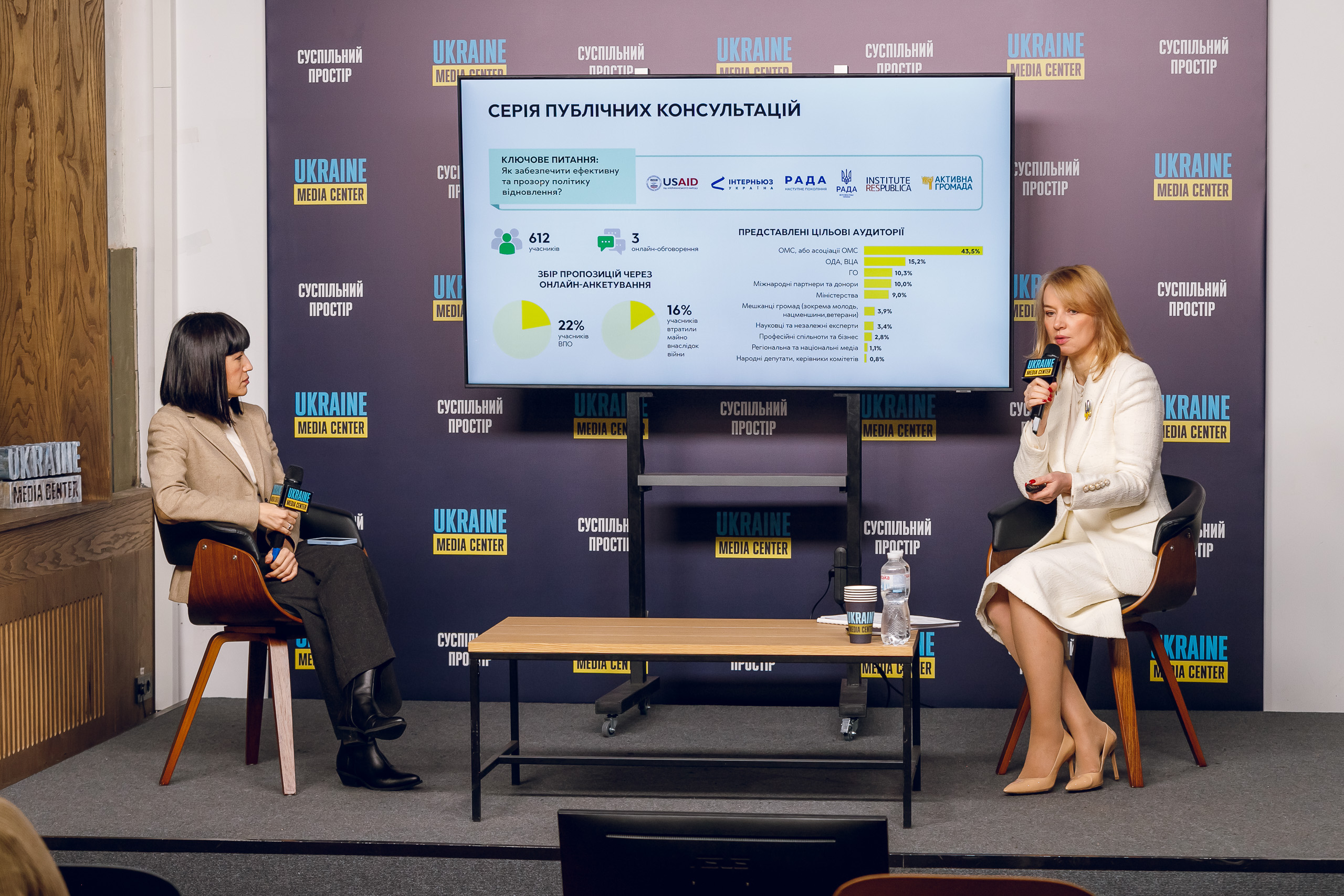
The value of the results of the public consultations “Effective and Transparent Recovery Policy” is that it represents the opinions of a wide range of stakeholders - from residents of communities who are recipients of services to the expert community. They confirmed the relevance and urgent need to have a balanced legislative framework for the recovery of regions and territories right now, before the end of hostilities in the country. An effective legislative framework will help to overcome the consequences of the war, create conditions for socio-economic growth, improve the livelihoods of the population and, accordingly, facilitate the return of Ukrainians from emigration.
The USAID RADA: Next Generation Program assists the Verkhovna Rada of Ukraine in conducting public consultations and events to take into account the opinions of as many stakeholders as possible in lawmaking.
Download