
Annual report2025
Internews Ukraine has 29 years of expertise in the areas of media, communications, education, and consulting.



Strengthening European values in Ukraine by developing a successful media ecosystem.

A prosperous, democratic, successful Ukraine.

- Pro-active Ukrainian stance.
- Responsibility and independence.
- Flexibility and adaptability.
- Teamwork and lifelong learning.
- Stress resilience and savvy.
- Professionalism and efficiency.
Our history
With its independence newly restored, and after decades under a totalitarian Soviet regime where free media did not exist, Ukraine needed an organization that would develop quality journalism. Internews Ukraine stepped into this critical role.
Our year in numbers
Development of independent media
Ukrainian media: news consumption and trust in 2025
We continued Internews Network’s 15‑year tradition of studying the Ukrainian media landscape. We conducted a comprehensive study of Ukrainians’ media consumption and documented where they get their news, whom they trust, and how well they can recognise manipulation. These data are crucial for media outlets, public authorities, and international organisations, helping them make informed decisions in the context of information warfare.


-
 1,649
1,649respondents
-
 10
10focus groups, including with IDPs and residents of frontline villages
-
 56
56in‑depth interviews
-
 12
12presentations and advocacy events
-
 360
360event participants
-
 186
186media and social media publications
-
3,043,181
reach of content about the study
The study findings were presented to representatives of Ukraine’s parliament, the Ministry of Culture, the Centre for Countering Disinformation of the National Security and Defence Council, the public broadcaster, and other institutions. Participants highlighted the practical value of the data for shaping state information policy.
The national presentation brought together 44 representatives of international organisations, diplomatic missions and media outlets, including the Embassies of Canada and the United States, the EU Delegation to Ukraine, BBC Media Action, the public broadcaster, and others.
Deputy Minister of Culture Hanna Krasnostup confirmed that the study’s data are being used to inform state information policy.
We presented the findings at the 10th Donbas Media Forum, at Redkolehiya 2025, and at the 34th Economic Forum in Karpacz, Poland.
The results were further disseminated by major outlets such as Ukrainska Pravda, NV.ua, Suspilne, Hromadske Radio, Forbes Ukraine, Espreso TV, and other media.
Supporting the sustainability of Ukrainian media
The project helped regional and hyperlocal media become more financially sustainable and better adapt to wartime conditions. To enable journalists to counter disinformation in their communities through quality content, we ran an online school, provided mentoring and financial support, and helped newsrooms unite in interregional coalitions.


-
162
participants
-
 105
105media outlets from across Ukraine
-
 16+
16+hours of training and workshops
-
20
media partners received support
-
 10
10cross‑newsroom coalitions
-
130
publications produced by participants
-
4,697,393
total reach of materials
The online school “Storytelling Solutions for Effective Media” became the largest in all three years of the project, with 162 participants, compared to 80 in 2024 and 42 in 2023.
Most coalitions formed within the project evolved into long‑term partnerships, as newsrooms saw that working together helps them remain resilient in times of crisis.
The long read “Why Has the Minute of Silence Become a Tradition in Khmelnytskyi Region but Not Yet in Odesa Region?” helped prompt the first‑ever minute of silence in the town of Reni to honour fallen Ukrainian defenders.
School of investigative journalism on ecocide
We ran the Green Watch school for journalists covering environmental issues and ecocide. The project mentor was Mariia Verbovska (NGL.media), with lectures by Olesia Ivanova (Bihus.Info) and Anatolii Ostapenko (Telebachennia Toronto). The strongest story ideas received fellowship support.


-
20
participants
-
8
published investigations
-
 41,063
article views
-
200,000+
social media reach
Eight investigations into ecocide resulting from Russia’s invasion were published by Kremenchuk Telegraf, Pershyi Zaporizkyi, Mediadokaz, USIONLINE, Skhidnyi Variant, Chronicle News Agency, Halka, and Reporters Media.
Tetiana Mylymko’s article on the readiness of Odesa’s resorts for summer prompted the city police to reopen two cases on Black Sea pollution and to call on citizens to report such crimes more actively.
Participants built lasting connections with leading investigative reporters in Ukraine to continue covering ecocide.
Communications for social change
UkraineWorld: telling the world the truth about Ukraine
UkraineWorld is a multilingual media project that has been explaining events in Ukraine to international audiences since 2015, debunking Russian propaganda and unpacking Ukrainian realities. The team produces podcasts, video reports from frontline areas, explainers, analytical articles, short videos, books, and human‑centred stories about Ukrainians, and distributes them via Facebook, X, Instagram, YouTube, Bluesky, and major podcast platforms.


-
 35
35million reach on Facebook
-
 13.6
13.6million impressions on X
-
 ~1
~1million plays on podcast platforms and YouTube
-
150,000+
followers on Facebook
-
273,000+
followers on X
Launched a new “Editorial” series — analytical pieces on developments that matter both for Ukraine and for the wider world.
Featured high‑profile podcast guests, including Timothy Snyder, Anne Applebaum, Marci Shore, and Niall Ferguson.
Established ongoing cooperation with the “Come Back Alive” Foundation, which strengthened coverage of defence‑related topics.
Podcast episodes with Oleksandra Matviichuk and Maksym Butkevych reminded global audiences about Ukrainians who have survived captivity and repression.
Involved leading Ukrainian experts — such as Hanna Shelest, Yevhen Hlibovytskyi, and Taras Tymochko — in building an evidence‑based narrative about Ukraine for the world.
Communications support for a new pharma regulator
Ukraine is establishing a new national body for state control in the pharmaceutical sector. The regulator will operate in accordance with EU standards and strengthen quality control of medicines and medical devices throughout the supply chain. We designed and began implementing a long‑term communication campaign for the Ministry of Health to explain the reform to businesses and the public and to secure support from international partners.


-
20+
publications in Ukrainian and international media
-
10,000+
readers of published materials
-
 1
1dedicated website that explains and tracks the progress of the reform
-
25+
communication materials for the Ministry of Health’s social media channels
Developed a package of strategic documents: a needs assessment, a communication framework, a strategy presentation, and a brochure for the pharmaceutical industry. The Ministry of Health uses these materials in meetings with businesses and during international visits.
Secured publications in leading outlets such as “European Pravda”, “Economic Pravda”, Liga.net, “Interfax‑Ukraine”, “Dzerkalo Tyzhnia”, “RBC‑Ukraine”, “Ukrinform”, The Pharm Media, Apteka.ua, “Rubryka”, and UkraineWorld.
Arranged an interview with Deputy Minister Maryna Slobodnichenko for the Polish specialist outlet Polityka Zdrowotna, drawing additional international attention to the reform.
Analysed the names and logos of regulators in 30 countries and proposed 52 branding concepts for the new authority.
Information campaign #UnitedToSupport
Together with UN agencies in Ukraine and the Government of Ukraine, we implemented an information campaign supporting survivors of conflict‑related sexual violence (CRSV). The campaign highlighted the scale of CRSV and informed people about available assistance, including the Help Platform for Survivors.


-
14
million reach
-
 91
91publications in 47 regional media outlets
-
 1,750
1,750posters and city lights
-
50
journalists trained on the sensitive reporting of CRSV
The campaign used multiple channels: special projects in national media, publications in regional outlets, social media posts, animated videos, sponsored posts on Telegram and Viber, radio spots, and video clips on Intercity+ trains.
Special projects were published by “Ukrainian Pravda. Life” and “Rubryka”.
We ran a training course, “How to report on CRSV,” for 50 journalists from across Ukraine. As a result, 58.8% of participants reported increased awareness of CRSV, with the greatest growth (71.6%) in understanding survivor support and the international response.
We produced a handbook for journalists, “How to report on conflict‑related sexual violence”.
Information campaign “Small Things Matter”
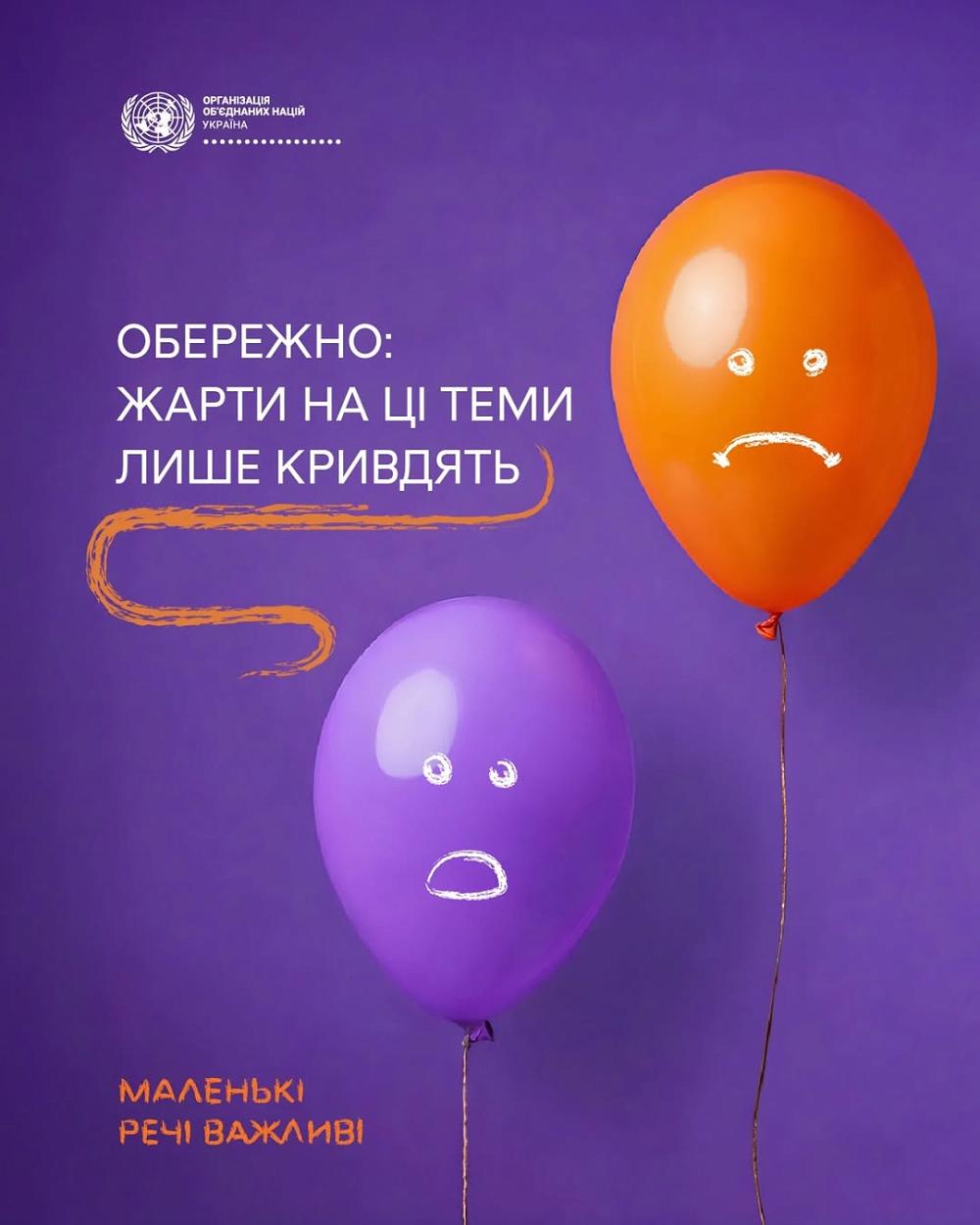
We implemented a digital campaign for the UN in Ukraine as part of the global initiative “16 Days of Activism against Gender‑Based Violence.” The campaign raised public awareness of GBV and showed that even small, everyday acts of empathy can significantly improve the lives of survivors.




-
255
mentions across the social media channels of UN agencies and their partners
-
16
multimedia content packages
-
3,061,388
total reach
Developed the campaign’s visual identity with a focus on sensitivity, humanity, and recovery.
Encouraged audiences to support survivors and helped foster a culture of care and non‑violence.
Support for the “Pubertat” platform
We created content for the Instagram page “Pubertat”, which provides teenagers and the adults close to them with reliable information about healthy relationships, mental health, personal safety, and growing up.


-
95
content units produced
-
15
posts published
-
1,430,927
total reach
Covered a wide range of topics, including gender stereotypes, inclusion, HIV awareness, personal safety, and mindful behaviour online and offline.
Teenagers submit questions, and the team responds in posts alongside experts.
Engaged influencer Danylo Haidamakha to highlight the issue of body‑related shame.
Press tours for journalists from the Global South
We organised two press tours for journalists from South Africa, India, and the Philippines to see Ukraine for themselves in the eleventh year of the war and report the reality back to their audiences. In parallel, we placed opinion pieces by Ukrainian writers, poets, and public intellectuals in media outlets in the target countries.


-
9
journalists
-
62
articles and social media posts by participants
-
722,541
views of participants’ materials
-
 235,673
views of op-eds by Ukrainian authors
-
979,404
total project reach
For 6 of the 9 journalists, this was their first visit to Ukraine. First‑hand experience and direct contact with Ukrainian experts replaced secondary sources, improving the accuracy and depth of their future coverage.
The most engaging pieces included Rebecca Davis’s report from Kyiv for Daily Maverick, Willem Jordaan’s story from de‑occupied territories for Netwerk24, and Umashankar Singh’s video from the streets of evening Kyiv.
An offline networking event in May brought together 26 Ukrainian experts and international journalists; participants are already being approached for comment in new stories.
Op‑eds by Ukrainian intellectuals in Indian, South African, and Philippine media offered audiences a personal, human‑centred perspective on Ukraine.
Ukraine Municipal Infrastructure Programme
We ensured strong public visibility for projects under the Ukraine Municipal Infrastructure Programme, financed by the European Investment Bank (EIB), through media content, public events, field reporting, and information boards at project sites.


-
939,192
users reached by a special project on ShoTam media
-
1,059,857
impressions of social media content
-
5
videos
-
3
TV reports
-
40
information boards installed at programme sites
Organised the opening of a viewing platform at the reclaimed Hrybovychi landfill near Lviv. The event was attended by EU Commissioner for Neighbourhood and Enlargement Marta Kos, Lviv Mayor Andriy Sadovyi, and EIB leadership, and was covered by outlets such as “Suspilne Lviv”, Forbes Ukraine, “Rubryka”, Zaxid.net, Delo.ua, and others.
Coordinated a visit by First Deputy Minister for Communities Development Alyona Shkrum to Ternopil; her video from the site reached over 6,200 views on social media.
TV reports from Dnipro, Mykolaiv, and Zaporizhzhia reached around 39,200 viewers.
Published interviews with First Deputy Minister Alyona Shkrum and EIB Group President Nadia Calviño on Ukraine’s reconstruction and infrastructure modernisation.
Supporting small businesses during the war
We ran an information campaign for Ukrainian micro, small, and medium‑sized entrepreneurs. Amid an overwhelming news cycle, we helped them navigate UNDP support and recovery programmes, highlighting current opportunities and how to leverage them.


-
9
infographics
-
6
analytical articles
-
7
opinion columns
-
4
special projects
-
 3
3videos
-
3,238,183
total reach
Conducted in‑depth research into the needs of small and medium‑sized businesses.
The campaign achieved over 3.2 million impressions, significantly exceeding initial targets. Thematic stories were published by Forbes Ukraine, “Economic Pravda”, NV.ua, Liga.net, and “Hromadske”.
Small and medium‑sized entrepreneurs gained access to structured, practical information about support options, helping them to develop their businesses in wartime conditions.
The article “Relying on real data: how the Business Barometer helps you stay ahead of the curve” reached 520,107 users.
The piece “From defenders to entrepreneurs: how ‘Trajectory 2’ opens new horizons for veterans” reached 395,952.
Ukraine Recovery Programme
We highlighted the European Investment Bank’s efforts to rebuild Ukraine through human stories of people whose lives have changed thanks to its recovery programmes. To achieve this, we created a mural, a project video, a series of posters, and a special media feature.


-
1,071,325
video views
-
 335,000
campaign reach in Intercity trains
-
202,469
reach of the special media project
Engaged renowned Ukrainian mural artist Sasha Korban to create a mural in Zaporizhzhia despite shelling and a drone strike on the building just before work began; over 13 media outlets covered the process, and the mural was later animated using AI.
Produced a project video, which reached 506,482 users and gathered over 1 million views.
Designed a series of posters and placed them in Intercity train carriages, reaching 335,000 passengers.
Together with “Rubryka”, developed a bilingual special project.
Consolidating stakeholders’ communication capacity
Kshtalt conscious blogging school
We organised the online conscious blogging school “Kshtalt” for aspiring content creators. Speakers included Anna Marchenko from the “Pryiemnyi vechir” YouTube channel, Danylo Haidamakha, Yuliia Pauk (founder of the “Movyty” community), Artem Albul of “Kliatyi Ratsionalist”, and Oksana Moroz (“Yak ne staty ovochem” YouTube channel), with Ukrainian diplomat Dmytro Kuleba as a guest speaker. The curriculum covered six topics: information hygiene, social impact, YouTube, working across platforms, targeting, and educational content.


-
67
participants completed the programme
-
 13
13participants received financial support and produced 30 pieces of content
-
10,178
views of participants’ materials
-
 98%
98%gave positive feedback on workshops and mentoring sessions
-
82%
reported improved knowledge of media literacy and countering disinformation
Participants gained hands‑on skills in producing quality content and applied them immediately: 13 received support and released their materials.
A bloggers’ hackathon created a space for developing creative ideas and sharing experiences among participants.
Communications workshop for civil society organisations
We ran a series of trainings and one‑to‑one consultations on communications for civic activists. The project strengthened regional CSOs' communication capacity and increased their visibility.


-
185
applications for 10 places
-
209,000+
reach for training‑related content on social media
-
91.2%
of participants reported improved skills
The number of applications confirmed the considerable demand for communications expertise among Ukrainian CSOs.
The project received very positive feedback from participants, who now articulate their needs more clearly, present results more effectively, and interact better with communities, partners, and donors.
Communications for communities at full capacity
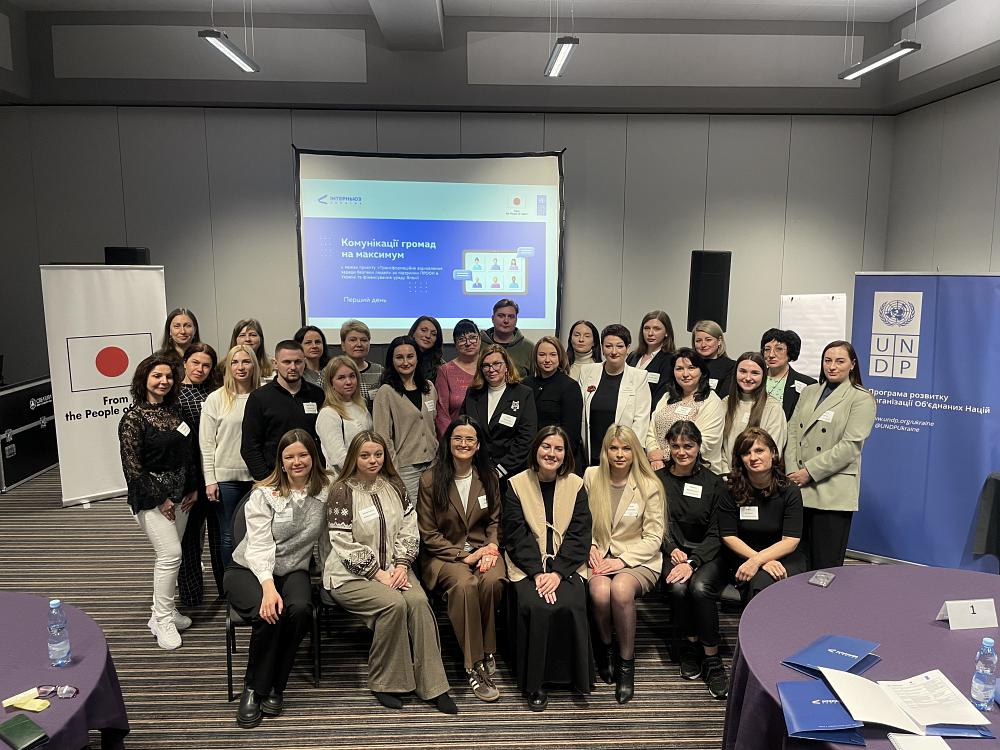
We carried out communication audits, developed tailored strategies, and organised an intensive three‑day training for representatives of the Novovolynska, Vyzhnytska, Chernechchynska, Valkivska, Prylutska, Kuialnytska, Khmelivska, Okhtyrska, Bohodukhivska, and Bila Tserkva territorial communities.


-
 10
10participating communities
-
24
training participants
-
3
days of learning
At the start of the training, the average test score was 61/100; by the end, it had risen to 79/100, with the top result reaching 100.
Each community received its communication strategy as a foundation for future engagement with residents.
The project will have a long‑term effect: these strategies will help local authorities communicate with residents through clear, consistent messages, fostering constructive dialogue and building trust in local governance.

Euro-Atlantic integration
Communicating about the EU for Ukraine, communicating about Ukraine for the EU
We provided comprehensive media support to the EU Delegation to Ukraine — from social media content production to training for regional journalists in Lviv, Cherkasy, Zhytomyr, Ternopil, Khmelnytskyi, Dnipro, and Odesa. The goal was to bring the EU closer to Ukrainians and help journalists report on European integration clearly and accurately.


-
8
two‑day trainings
-
200+
journalist participants
-
2
press visits to EU summits in Brussels
-
250
graphic assets
-
30
videos
-
4
social media audits
Journalists deepened their understanding of Ukraine’s path to the EU, the Union’s support, and tools to counter disinformation about European integration, consistently noting the practical value of the training.
Follow‑up journalism competitions encouraged participants to explore EU–Ukraine cooperation at the local level, resulting in stories on support for businesses, IDPs, and communities in cities such as Rivne, Dnipro, Vinnytsia, Zaporizhzhia, and others.
Conducted four social media audits of the EU Delegation to Ukraine and Ambassador Katarina Mathernova’s pages, followed by practical recommendations to optimise their content strategy. Within a year, the Delegation’s Meta pages gained 5,286 new followers and 6,850,000 in reach.
Next Visionaries: academic programme on European integration and innovation
The Next Visionaries programme brought together young people aged 21–27 from across Ukraine for in‑depth learning on European integration and innovation. It prepares leaders who will shape Ukraine’s European future. Among the speakers were Pavlo Sheremeta, Serhiy Leshchenko, and a range of international experts, with the Office for the Coordination of European and Euro‑Atlantic Integration of Ukraine as a key partner.


-
32
young leaders
-
 52
52lecturers and mentors
-
72%
of participants completed the programme and received certificates
-
1,016
Instagram followers
-
326,768
content views over the year
Participants showed strong academic results. Yaroslav Makodzeba secured an internship in the office of MEP Magdalena Adamowicz, while Daria Ahafonova was selected for an ERASMUS semester exchange at the University of Glasgow.
The three most active participants — Daria Ahafonova, Violetta Karpenko‑Zinkevych and Viktor Hnativ — attended the European Forum Alpbach 2025.
Two participant teams continue to develop their projects after the programme and are actively seeking partners.
Countering Russian disinformation and propaganda
#DisOut: strengthening resilience to disinformation
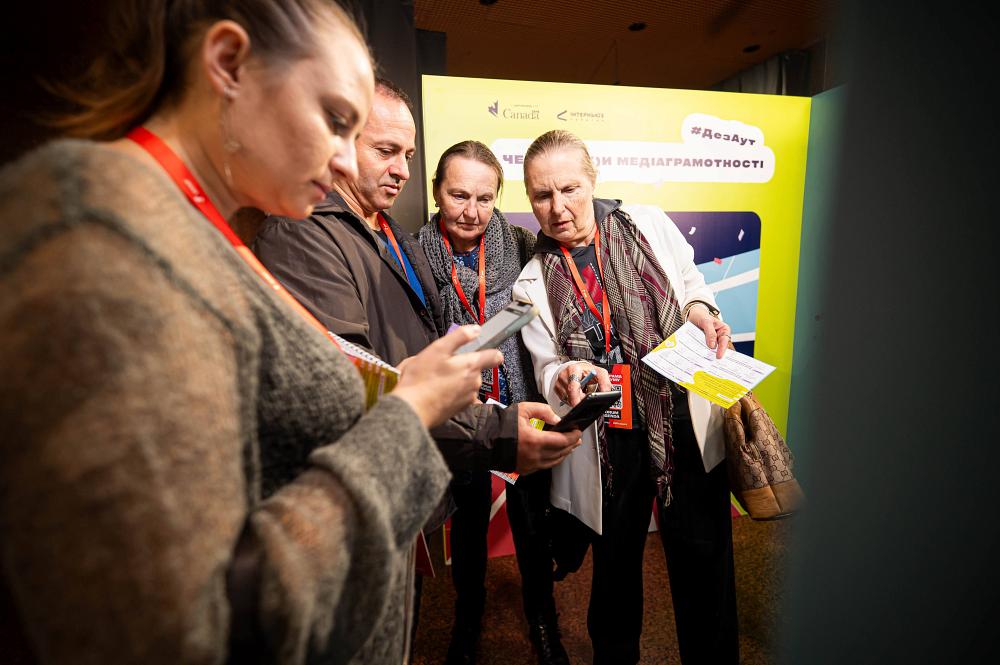
We helped Ukrainians better recognise manipulation and disinformation. The project created a network of media literacy clubs in 16 communities, ran a communication campaign, and organised an interactive exhibition in four cities.


-
16
media literacy clubs in 13 regions
-
135
club events over the year
-
94.4%
of participants reported improved media literacy skills
-
2,441
people attended the exhibitions
-
 81.5%
81.5%of visitors plan to apply the knowledge gained
-
3.8
million total reach of the communication campaign
In Cherkasy, a media literacy club grew into a Research and Training Centre at the national university.
In Kharkiv, the club’s initiative evolved into the first Kharkiv Media Forum.
The Baryshivka club initiated the creation of a new club in Irpin and attracted separate funding for training in communities across the Kyiv region.
The project fostered women’s leadership at the community level — most clubs are led by women.
54.8% of exhibition visitors said their critical‑thinking skills improved significantly after attending. The format proved effective for diverse audiences, including the public, journalists, educators, and military cadets.
Countering Kremlin disinformation about the EU
The Kremlin actively spreads disinformation about Ukraine–EU relations to undermine trust in European integration and sow doubt. We trained journalists, educators, and activists to recognise and debunk these narratives, while supporting a network of regional fact‑checking journalists from 12 media outlets who monitor and expose anti‑EU fakes in their regions every quarter.


-
125
participants of four workshops from 19 Ukrainian regions
-
48
fact‑checking pieces published
-
65,000
views of these materials
-
234,704
reach for social media posts about the project
Organised regional fact‑checking workshops for media professionals, educators, and civic activists in Vinnytsia, Lutsk, Cherkasy, and Kyiv; EU Ambassador to Ukraine Katarina Mathernova attended the Kyiv event.
Held an interactive event for Kyiv students — “EU Fact Check: truth or fake?” — featuring a custom‑designed debate game.
The team game format “Fake‑makers vs Fact‑checkers” resonated strongly with participants, who shared their impressions widely on social media, generating 70 posts.
We launched the Joint Events Platform “Eurointegration Without Disinformation” to strengthen media literacy and resilience to disinformation about Ukraine–EU relations.
Digital security
Social media in wartime: a risk‑management guide
Together with experts, we prepared two documents: a risk‑management guide and a case study on the situation in Ukraine. They outline the challenges of content moderation on Meta and Google platforms during wartime and propose a practical framework for assessing and mitigating online risks.


-
2
documents
-
24
working group members
Produced Ukraine’s first guide offering practical recommendations for countering disinformation and hate speech online. It aims to improve respect for human rights on global platforms such as Meta, Google, and TikTok.
Brought together a national working group of former tech‑company employees, disinformation experts, fact‑checkers, gender specialists, and media professionals.
Developed pioneering documents for Ukraine that can serve as a basis for negotiations with tech giants on protecting freedom of expression and as a model for other countries facing similar threats.

Building Internews Ukraine’s organizational capacity
After USAID programmes were suspended in February 2025, the organisation risked losing part of its team. With support from the European Endowment for Democracy, we were able to retain over 65% of staff, continue developing new projects and initiatives, fulfil all commitments to partners and donors, maintain internal processes, and support the team through uncertainty.
65+ people on the team: we managed to keep key experts.
We continued to work with AI tools and tech platforms to automate and improve processes.
We began building our own model of financial sustainability through the communications agency Compions.
We successfully pass international‑level financial audits, confirming that even in crisis, our systems and procedures remain stable and effective.
Programme Director Andrii Kulakov joined the Expert Council on building a system of state strategic communications in Ukraine.
Creative Director Diana Ishchenko received the Women of Europe Award in the “Women in Media” category.
Focus for the next year
In 2026, as Internews Ukraine marks its 30th anniversary, we will deepen our analysis of the Ukrainian media landscape and support those who shape it. Building on the results of 2025, we plan to conduct several media studies on social cleavages in Ukrainian society, the role of regional media on YouTube, Telegram’s place in the information environment, and news consumption and media trust in 2026. We will also launch new initiatives through the Ukrainian Media and Society Fund to help newsrooms survive and grow. And we will continue strengthening the community of media professionals, bloggers, and civic activists.
Guided by our values and mission, we will continue to work on implementing 8 strategic priorities:
-
Development of independent media
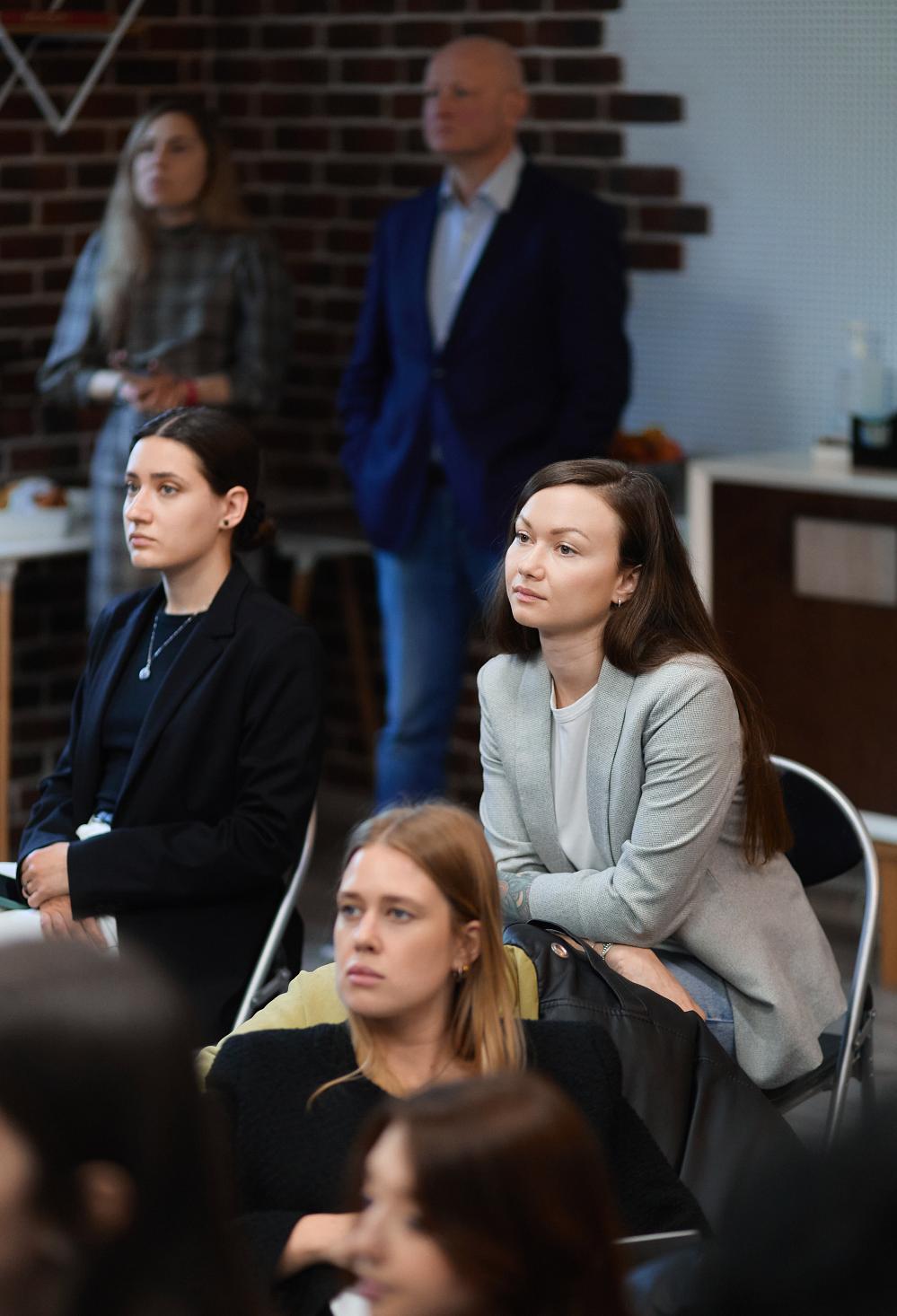
We are helping independent media outlets to not only survive the challenges of wartime, but to emerge stronger and more sustainable. With our innate understanding of Ukrainian media needs and our long and storied experience of supporting journalists and outlets, Internews Ukraine is perfectly positioned to help the Ukrainian media sector endure and thrive.
-
Social impact communications
With the full-scale war, the struggle for minds both in Ukraine and abroad continues, and the need to communicate Ukraine’s story to the world and promote ideas facilitating Ukraine's reintegration with the global network of democratic countries is perhaps more existential than ever, as ‘Ukraine fatigue’ sets in abroad, and internal audiences’ first concern is survival.
-
Strengthening communication capacities of government, civil society, and the media
Effective and transparent communication serves as the cornerstone of a resilient and engaged democracy in Ukraine, fostering trust, participation, and accountability among both citizens and institutions.
-
Euro-Atlantic integration
We need to focus on demystifying and explaining the complex bureaucratic and political processes of integration, to ensure the ordinary citizen understands what is at stake while also not having unrealistic expectations.
-

InfoWatch
We will work to increase Ukrainians’ media literacy, as well as to build a healthy information space in Ukraine.
-

Digital security
In response to the challenges of hybrid warfare, we will focus on developing important cybersecurity skills both within our team and among the public.
-

Government Affairs and Strategic Communications
We will work more closely with our government institutions, to help them reform and deliver on their commitments to our country and its citizens to preserve democratic principles in Ukraine even in times of war.
-

Building Internews Ukraine’s organizational capacity
We will continue to apply modern management approaches to build teams, implement digitalization, and optimize all business processes.